
IndiaAI Compute Scaling: 100,000 GPUs Target, ₹65/hr Subsidies & C-DAC RUDRA-AUM Node
An operational analysis of the Ministry of Electronics and Information Technology (MeitY) expanding subsidized GPU access under the ₹10,372 crore IndiaAI Mission toward 100,000 GPUs, alongside C-DAC’s indigenous RUDRA-AUM sovereign compute node under Semicon 2.0.
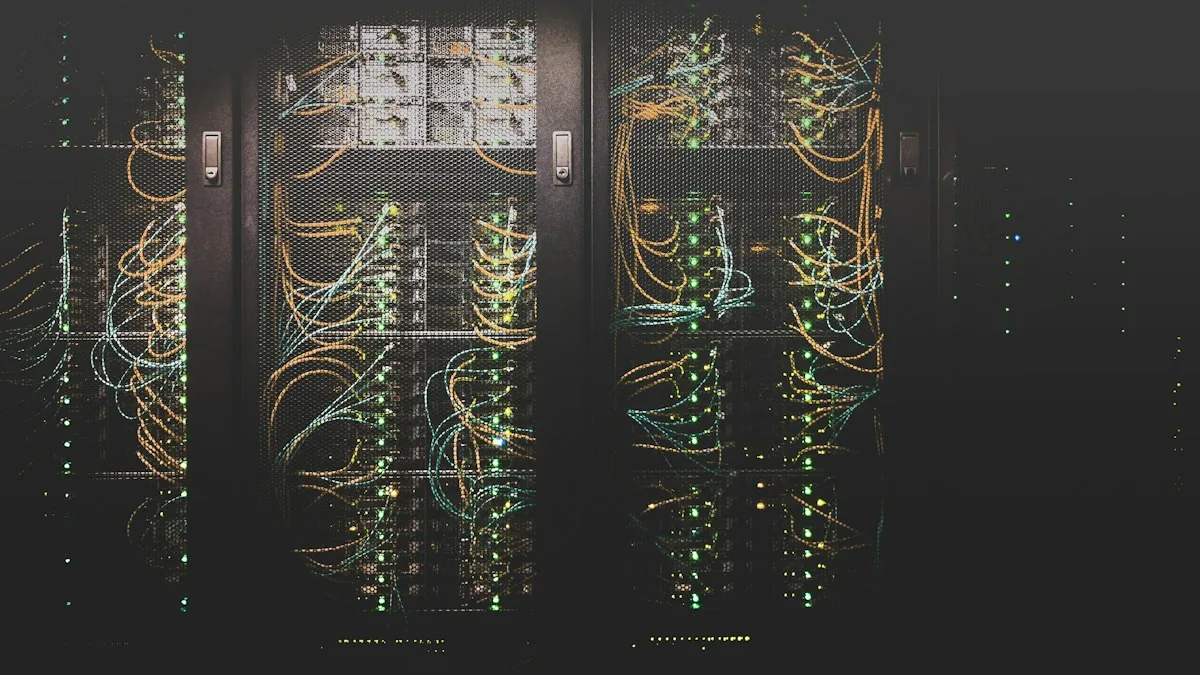
Direct Liquid Cooled · Sub-₹65/hr Tier
The Public-Private Partnership: How India Subsidizes Frontier Compute
Unlike nations attempting to construct state-monopolized datacenter facilities from scratch, the Government of India structured the compute pillar of the IndiaAI Mission through a high-velocity Public-Private Partnership (PPP) framework.
The core operational mechanics:
- Empaneled Hyperscalers: Domestic cloud providers (including Yotta, Tata Communications, CtrlS, and Jio) deploy enterprise-grade GPU clusters (NVIDIA H100, H200, and GH200 Grace Hopper systems) on commercial real estate.
- Government Vouchers: Startups recognized by DPIIT, academic institutions, and national research labs receive compute credits that subsidize up to 50% of the hourly rate, bringing the effective operator cost down to approximately ₹65 per GPU-hour ($0.80/hr).
- Scaling to 100,000 GPUs: Having crossed the 38,000 empaneled GPU threshold by mid-2026, MeitY’s expanded procurement guidance projects reaching 100,000 active sovereign GPUs by the end of 2026.
C-DAC RUDRA-AUM: The Sovereign Silicon Roadmap
Alongside commercial GPU empanelment, the Centre for Development of Advanced Computing (C-DAC) revealed technical parameters for the RUDRA-AUM Compute Node, displayed following SEMICON India 2026:
- Indigenous 64-Bit Arm Architecture: Powered by dual AUM processors utilizing 96 Arm Neoverse V2 cores, designed for sovereign HPC and AI accelerator coupling.
- HBM3 High-Bandwidth Memory: Delivers over 1.5 TB/s of memory bandwidth per socket, eliminating memory-wall bottlenecks for quantized LLM fine-tuning and inference.
- Semicon 2.0 Integration: Backed by the newly notified ₹1.28 lakh crore Semicon 2.0 policy, ensuring domestic ATMP (assembly, testing, marking, and packaging) pipelines for long-term supply chain autonomy.
Impact for Indian Founders and Operators
For engineering leaders building AI systems in Bengaluru, Hyderabad, and Mumbai, this dual strategy fundamentally changes unit economics:
- Elimination of Data Egress Costs: Keeping data pipelines local eliminates international cross-region data transfer fees while ensuring full compliance with the Digital Personal Data Protection (DPDP) Act and RBI localization mandates.
- Lower R&D Capital Burden: Founders can train domain-specific Indic models without relying on overseas venture debt or international cloud credit programs.
Verified Primary Citations
- IndiaAI Mission Compute Capacity Disclosures: Ministry of Electronics and Information Technology (MeitY) Official Records
- C-DAC RUDRA-AUM System Architecture: SEMICON India 2026 Proceedings & C-DAC Silicon Whitepapers
- Press Information Bureau (PIB) Release: Cabinet Approval on IndiaAI Mission & Semicon 2.0 Outlays
Deploying on Subsidized Sovereign GPUs or Optimizing Cloud AI Costs?
ABATA AI architects sovereign model pipelines, low-latency agent infrastructure, and local compute deployments. Book a free 20-minute operational diagnosis directly with our engineering founders.