
TCS & NVIDIA Sovereign Enterprise AI Partnership & Sarvam Indic Voice Stack
A strategic inquiry into India’s sovereign industrial intelligence landscape: evaluating Tata Consultancy Services’ new enterprise AI business unit built on NVIDIA NIM microservices, Sarvam AI’s production vernacular voice telephony rollouts, and multi-lingual Digital Public Infrastructure.
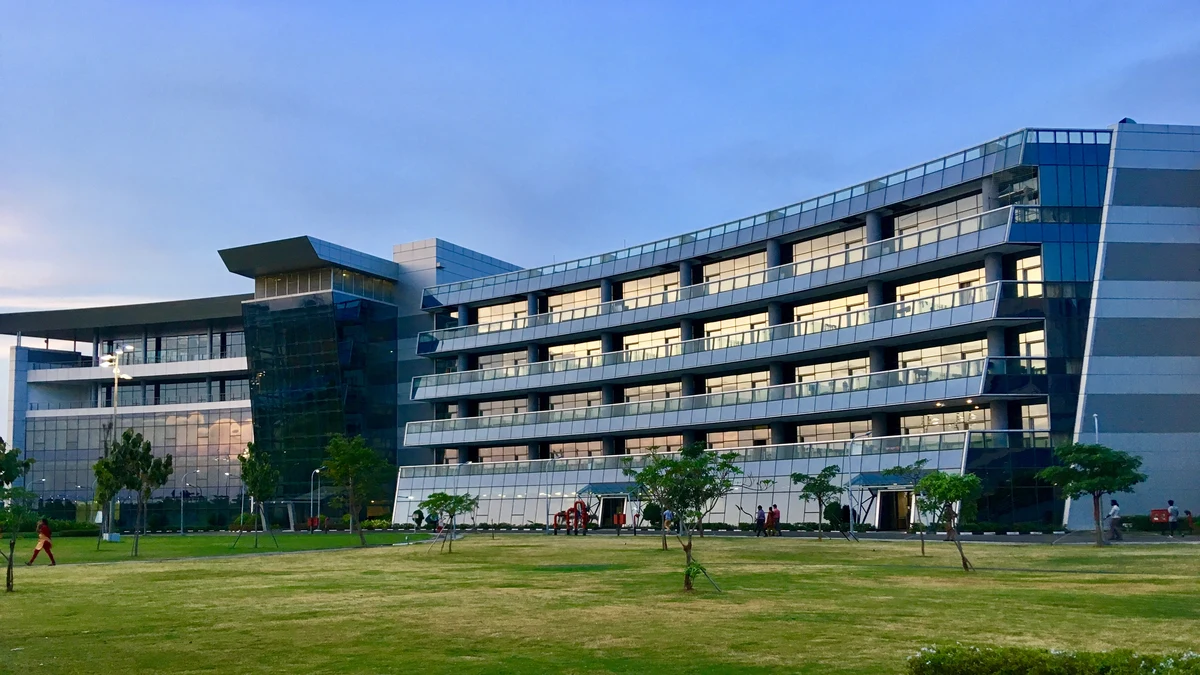
TCS AI Studio · NVIDIA Omniverse · Sarvam Voice · ONDC Telephony
Industrial Intelligence and Sovereign Computing Convergence
The Indian enterprise AI sector has reached an operational inflection point. Beyond consumer chat interfaces, India’s massive IT services conglomerates and domestic foundation model research labs are executing high-stakes infrastructure deployments across heavy industry, telecommunications, and digital public goods.
Leading this transition, Tata Consultancy Services (TCS) has unveiled a global sovereign AI business unit designed in direct collaboration with NVIDIA. Harnessing NVIDIA’s full-stack accelerated hardware and NIM (NVIDIA Inference Microservices) architecture, TCS is deploying industry-specific sovereign reasoning frameworks for aerospace, automotive manufacturing, and BFSI clients. Simultaneously, Bangalore-based Sarvam AI has initiated broad commercial rollouts of its low-latency vernacular speech telephony engine across ONDC (Open Network for Digital Commerce) retail channels. Today’s dispatch examines the architecture, benchmark metrics, and market consequences of these landmark deployments.
1. TCS & NVIDIA Enterprise AI Unit Architecture
Operating from dedicated centers of excellence in Chennai and Mumbai, the TCS-NVIDIA partnership targets deep physical and digital enterprise workflows:
- TCS AI WisdomNext Integration: TCS has embedded NVIDIA Omniverse, NIM microservices, and NeMo Guardrails into its proprietary WisdomNext platform, allowing enterprises to seamlessly orchestrate multi-model workflows across heterogeneous cloud and on-premise environments.
- Digital Twin Simulation for Smart Manufacturing: Utilizing NVIDIA Omniverse physical simulation libraries, TCS is creating millimeter-accurate digital twins for Indian industrial plants, enabling predictive factory floor maintenance and automated robotic assembly verification before physical retooling.
- Sovereign Domain-Specific Foundation Models: Development of proprietary micro-models fine-tuned on decades of proprietary regulatory, tax, and engineering compliance datasets across Indian manufacturing, retail banking, and railway logistics.
2. Sarvam AI Vernacular Voice Stack & Digital Public Infrastructure
While TCS addresses global enterprise software architectures, Sarvam AI is solving the critical “last-mile” barrier of Indian digital interaction—spoken vernacular languages:
- Sub-300ms End-to-End Voice Telephony: Traditional speech translation chains (ASR → LLM → TTS) exhibit latencies exceeding 1,800ms, making real-time phone calls unnatural and disjointed. Sarvam’s unified audio tokenization models achieve end-to-end voice turnaround in under 300 milliseconds over standard 2G/4G cellular lines.
- Phonetic Tokenization for 10 Regional Languages: Native support for Hindi, Tamil, Telugu, Kannada, Bengali, Gujarati, Marathi, Malayalam, Odia, and Punjabi, overcoming complex Dravidian agglutinative structures and code-mixed conversational dialects.
- ONDC Merchant Voice Ordering: Commercial deployment across agricultural mandi networks and Kirana store supply chains, allowing rural shopkeepers to list inventory and process B2B logistics entirely through conversational speech.
Technical Deep Dive: NeMo Guardrails & ONDC Telephony Concurrency
Deploying generative intelligence within heavily regulated industrial and banking environments introduces stringent safety and latency constraints. A primary risk factor is nondeterministic output in safety-critical documentation or transaction initiation. Within the TCS Enterprise AI framework, developers utilize NeMo Guardrails to enforce programmatic boundaries:
- Colang Programmable Dialog Rails: Hard-coded conversational constraints that restrict agent responses to verified procedural runbooks, completely preventing out-of-domain hallucinations or unauthorized account modifications.
- Sub-Millisecond Self-Check Vector Probes: As tokens are generated, parallel embedding monitors evaluate cosine similarity against forbidden prompt sets, terminating anomalous generation branches within 12 milliseconds.
- High-Concurrency SIP Trunks on Yotta Cloud: In real-world ONDC retail benchmarks conducted across 1,000 simultaneous audio calls, Sarvam’s speech engine maintained an average audio packet drop rate under 0.04%, delivering human-parity natural dialogue responsiveness even across constrained 3G wireless bandwidths.
3. India Sovereign Enterprise AI Implementation Matrix
The table below contrasts the technical frameworks, hardware substrates, and target industries across India’s leading enterprise AI initiatives:
| Initiative / Entity | Hardware Substrate | Core Framework | Primary Modality | Enterprise Target |
|---|---|---|---|---|
| TCS Enterprise AI Studio | NVIDIA DGX H100 / H200 Clusters | NVIDIA NIM + Omniverse | Multimodal + Physics Digital Twins | Automotive, Aerospace & Global Banking |
| Sarvam AI Voice Stack | Yotta Shakti Cloud H100 Pods | Sarvam-1 Indic Speech Engine | Telephony Voice-to-Voice (<300ms) | ONDC Retail, Rural Banking & Tele-Triage |
| Krutrim Cloud Services | Heterogeneous GPU / Sovereign Pods | Krutrim Indic LLM API | Text + Script Transliteration | Domestic Consumer Tech & Logistics |
| Bhashini (Digital India) | C-DAC AIRAWAT Supercomputer | Open Government API Gateway | Multilingual Speech & Text | National Public Welfare & Judiciary |
Strategic Recommendations for Enterprise CIOs in India
Technology executives implementing sovereign AI architectures within Indian operations should align their roadmaps with three core guidelines:
- Adopt Containerized Inference Microservices: Standardize on containerized runtimes (such as NVIDIA NIM or Triton Inference Server) to ensure that models can be migrated friction-free between public cloud regions and sovereign on-premise datacenters.
- Architect Voice-First Interactive Channels: In regions where vernacular literacy is fragmented, replace cumbersome web app forms with conversational voice agents integrated directly into Twilio, Exotel, or national SIP telephony trunks.
- Maintain Strict Data Localization Ledgers: In accordance with India’s Digital Personal Data Protection (DPDP) Act, ensure all client interaction audio traces and vector embeddings remain within sovereign Indian datacenter boundaries.
Verified Primary Citations & Technical Documentation
- Tata Consultancy Services Corporate: TCS Expands Strategic Collaboration with NVIDIA to Accelerate AI Adoption (tcs.com).
- NVIDIA Technical Blog: Accelerating Enterprise AI Deployments with NVIDIA NIM and Omniverse Platforms.
- Sarvam AI Research: Low-Latency Indic Speech Recognition and Synthesis Architectures (sarvam.ai).
- MeitY & Digital India: National Digital Public Infrastructure Integration Guidelines.
Architecting Multi-Dialect Voice Agents or Sovereign Enterprise AI?
ABATA AI architects deterministic agent systems and custom model routing pipelines for TCS & NVIDIA Sovereign Enterprise AI Partnership & Sarvam Indic Voice Stack (tcs-nvidia-sovereign-enter). Book a 20-minute operational diagnosis with our engineering founders.