
Governor Gavin Newsom Vetoes California SB 1047: Policy & Silicon Impact
An in-depth legal, technical, and industry post-mortem on California Governor Gavin Newsom’s historic veto of Senate Bill 1047: examining why compute-based thresholds failed, the critique from academic luminaries Dr. Fei-Fei Li and Jennifer Tour Chayes, and California’s new empirical AI safety roadmap.
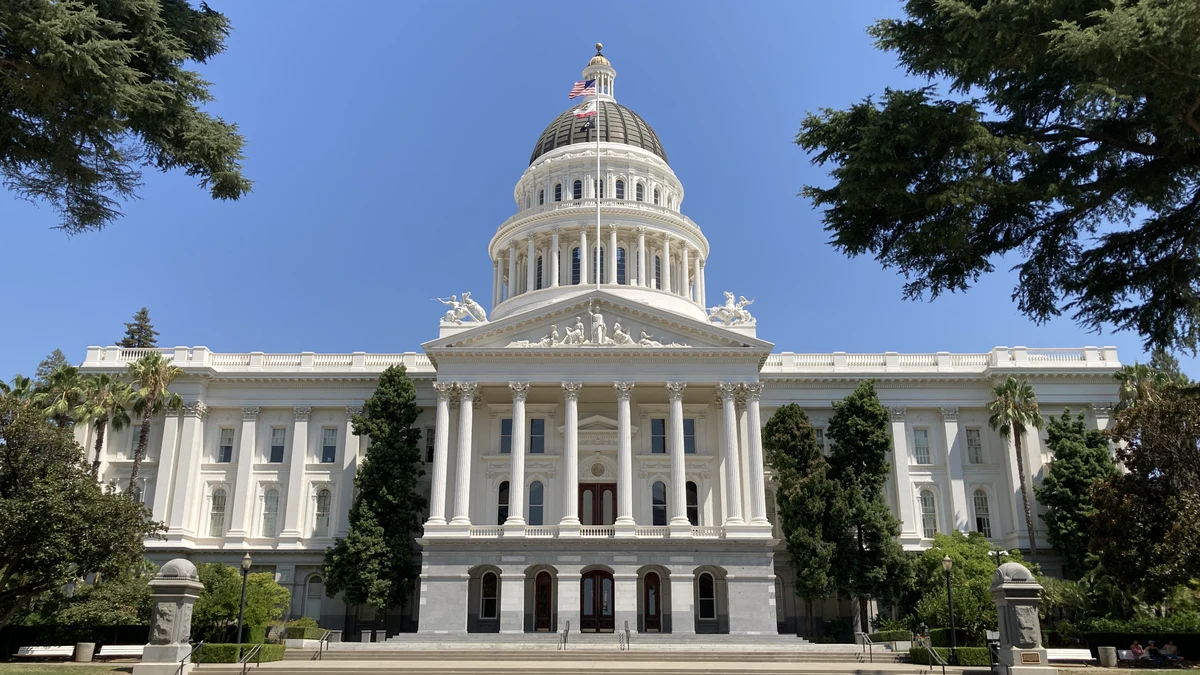
SB 1047 Veto · Gavin Newsom · Sacramento Capitol · Empirical Risk Science
The Climax of the Most Contentious AI Legislative Battle in US History
Following months of ferocious national debate that divided Silicon Valley, Capitol Hill, and the academic AI research community, California Governor Gavin Newsom has officially vetoed Senate Bill 1047 (the Safe and Secure Innovation for Frontier Artificial Intelligence Models Act). Authored by State Senator Scott Wiener, the bill proposed criminal and civil liability for developers of models costing over $100 million or trained using more than $10^{26}$ floating-point operations (FLOPs) if their models caused catastrophic downstream harm.
In his detailed, five-page veto message released from Sacramento, Governor Newsom rejected the premise that model compute thresholds correlate cleanly with actual real-world catastrophe. He argued that SB 1047 would impose onerous pre-deployment liability on California innovators while granting a free pass to smaller, fine-tuned models deployed in dangerous high-consequence domains. Today’s executive intelligence dispatch dissects the legal rationale, industry reverberations, and forward-looking regulatory framework established by the Governor’s decision.
1. Deconstructing Governor Newsom’s Veto Rationale
The gubernatorial veto message centers around three foundational criticisms of SB 1047’s architecture:
- The Fallacy of FLOP-Based Thresholds: The Governor emphasized that tying statutory compliance exclusively to a $10^{26}$ FLOP or $100M cost threshold misunderstands algorithmic acceleration. Breakthroughs in architectural efficiency (e.g., Mixture-of-Experts, post-training reasoning distillation) routinely allow smaller, less expensive models to match or exceed the capabilities of massive legacy runs.
- Neglecting Actual Deployment Context: SB 1047 applied uniform pre-harm liability regardless of whether a frontier model was deployed in high-risk critical infrastructure or used for benign creative writing. Conversely, a sub-$100M model deployed to operate medical dosage pumps or electrical grid substations remained entirely exempt from the bill’s oversight.
- Chilling the Open-Source Ecosystem: Newsom concurred with open-source advocates that imposing strict criminal perjury declarations and downstream negligence liability on model creators would compel developers to withhold open weights or geo-block California researchers.
2. The Alternative: Partnering with Stanford and UC Berkeley Luminaries
Rather than abandoning AI safety, Governor Newsom announced an executive initiative to craft empirical, science-driven governance:
- Academic Advisory Partnership: The administration has partnered with prominent AI academics—including Dr. Fei-Fei Li (Co-Director of Stanford HAI) and Dr. Jennifer Tour Chayes (Dean of UC Berkeley’s College of Computing, Data Science, and Society)—to develop risk-based evaluation protocols.
- Targeting Empirical Risk and Domain Deployment: Future legislative proposals will focus on the specific environment where AI systems are deployed (healthcare, financial clearing, civil infrastructure) rather than abstract pre-training compute metrics.
- Signing 17 Targeted California AI Measures: Newsom highlighted that he has already signed 17 specialized AI bills into law this session, including legislation banning election deepfakes, protecting Hollywood actor likenesses, mandating watermarking standards, and establishing California AI literacy programs.
3. Legislative Impact Comparison: SB 1047 vs. California’s Signed AI Slate
The table below contrasts the vetoed SB 1047 proposal with the key AI measures officially enacted into California statutory law:
| Bill Number | Primary Focus | Target Scope | Compliance Mechanism | Gubernatorial Action |
|---|---|---|---|---|
| Senate Bill 1047 | Frontier Model Pre-Harm Liability | Models > $100M or 10^26 FLOPs | Mandatory Killswitch & AG Injunction | VETOED (Sep 29, 2026) |
| AB 2013 | Generative AI Training Data Transparency | All GenAI deployed in California | Publish High-Level Data Summaries | SIGNED INTO LAW |
| AB 2655 | Defending Democracy from Election Deception | Large Online Platforms | Remove Malicious Election Deepfakes | SIGNED INTO LAW |
| SB 942 | California AI Transparency Act | GenAI with > 1M monthly users | Free AI Content Detection Tool | SIGNED INTO LAW |
What the Veto Means for Technology Founders and Enterprise Leaders
The veto of SB 1047 removes immediate existential legal clouds for California startups, but tech executives should prepare for three structural developments:
- Prepare for AB 2013 Training Transparency Mandates: Beginning January 2026, California law requires developers of generative models to publish detailed summaries of datasets used to train models released in the state, including copyright status and synthetic data ratios.
- Federal Vacuum Remains: With California pausing comprehensive pre-deployment licensing, federal agencies (NIST, FTC, DOJ) will intensify enforcement under existing consumer protection and antitrust statutes.
- Focus on Deployment-Level Guardrails: Engineering teams must invest heavily in runtime alignment, input/output guardrails, and adversarial red-teaming tailored to specific production use cases rather than relying on blanket compute compliance certifications.
Verified Primary Citations & Technical Documentation
- Office of Governor Gavin Newsom: Official Veto Message on Senate Bill 1047 (gov.ca.gov/newsroom).
- California State Senate: Senate Bill 1047 Final Enrolled Text and Legislative Committee Analyses.
- Stanford Institute for Human-Centered Artificial Intelligence (HAI): Statement from Dr. Fei-Fei Li on Frontier AI Regulation.
- California Legislative Information: Enacted Statutes for AB 2013, AB 2655, and SB 942 (leginfo.legislature.ca.gov).
Navigating AI Regulatory Compliance or Building Safe Enterprise Architectures?
ABATA AI architects deterministic agent systems and custom model routing pipelines for Governor Gavin Newsom Vetoes California SB 1047: Policy & Silicon Impact (governor-gavin-newsom-veto). Book a 20-minute operational diagnosis with our engineering founders.