
India Sovereign AI Safety Framework: Tailoring Frontier Guardrails for 1.4 Billion Citizens
A strategic policy and technical analysis of India’s push for a sovereign AI safety framework: examining why Western voluntary pacts fail at Indian demographic scale, the governance of 22 scheduled languages, and national defense against synthetic disinformation swarms.
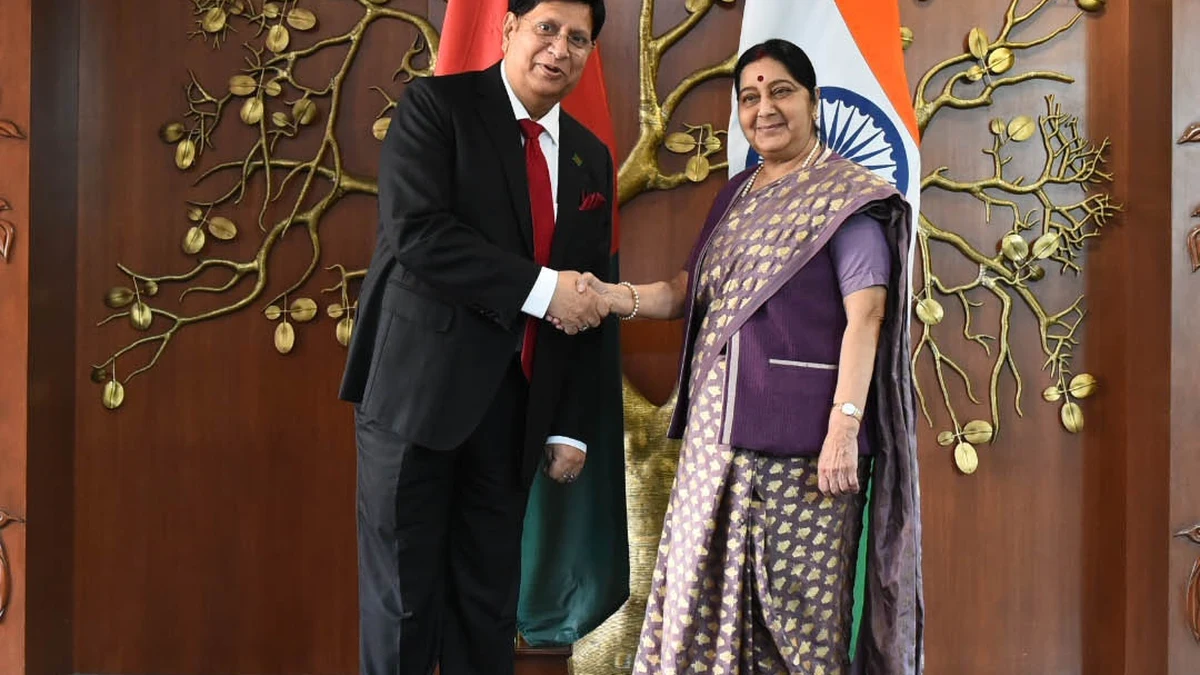
Photo: Wikimedia Commons / Government of India Press Information Bureau
The Limitations of Western Safety Frameworks in the Global South
Following the signing of the “White House Accord on Super Intelligence” in Washington on September 29, 2026, technology policymakers across New Delhi, Bengaluru, and Hyderabad faced an urgent strategic dilemma. The American agreement, brokered between federal authorities and Silicon Valley titans, is fundamentally structured around Western commercial priorities: high-end compute thresholds (10^26 FLOPs), voluntary corporate self-regulation, board-level committees, and hypothetical frontier existential risk scenarios.
However, top Indian technology leaders, legal scholars, and government advisors argue that simply transposing the White House Accord or the European Union’s bureaucratic AI Act onto the Indian subcontinent is not only unworkable—it poses an active danger to national technological sovereignty.
For India, a country of 1.4 billion citizens navigating high smartphone penetration, rapid digital public infrastructure (DPI) adoption, and deep socio-linguistic diversity across 22 constitutionally recognized languages, AI risk is neither abstract nor distant. It is immediate, operational, and deeply cultural. Consequently, the Ministry of Electronics and Information Technology (MeitY), in partnership with the IndiaAI Mission and domestic academic consortia (IIT Madras, IIT Bombay, IIIT Hyderabad), has initiated the formulation of a comprehensive Sovereign AI Safety Framework.
Why India Requires a Bespoke Sovereign Safety Architecture
India’s AI safety imperatives diverge from Western regulatory frameworks across four primary pillars:
1. Multilingual Alignment Beyond the English-Centric Hegemony
Over 90% of frontier model safety research, red-teaming benchmarks, and reinforcement learning from human feedback (RLHF) datasets are conducted in English, with secondary attention paid to Mandarin, Spanish, and French. When applied to Indic languages—such as Hindi, Bengali, Telugu, Tamil, Marathi, and Kannada—frontier Western models exhibit dangerous alignment failures:
- Cross-Lingual Jailbreaking: Adversarial prompts that are strictly refused in English frequently bypass safety guardrails when translated into regional Indic dialects or code-mixed vernaculars (e.g., Hinglish or Tanglish), because tokenizers fragment Indic scripts into obscure subword tokens that escape safety classifiers.
- Cultural Context Blindness: Western alignment datasets cannot properly interpret regional sensitivities, historical caste contexts, communal nuances, or local legal boundaries, leading models to either hallucinate offensive content or over-censor benign cultural expressions.
2. Hyper-Scalable Defense Against Synthetic Voice and Deepfake Fraud
With India’s rapid adoption of unified payments (UPI) and Aadhaar-enabled financial systems, synthetic voice cloning and video deepfakes represent an acute economic vulnerability. In urban and rural hubs alike, fraudulent voice agents mimicking family members or financial authority figures have targeted citizens at scale. India’s sovereign safety architecture mandates:
- Mandatory Cryptographic Watermarking: All generative audio and video runtimes operating within domestic digital networks must embed verifiable cryptographic provenance watermarks (compliant with C2PA and India’s domestic standard).
- Real-Time Voice Authentication Filters: Telecom service providers (Jio, Airtel) are integrating AI-driven synthetic speech detection algorithms directly at the cellular telephony gateway layer to flag synthesized audio during incoming cellular calls.
3. Democratic Integrity and Electoral Guardrails
India operates the largest democratic electoral exercise on earth. Western models trained without deep contextual understanding of domestic election regulations (Election Commission of India directives) risk being co-opted for hyper-targeted synthetic voter disenfranchisement campaigns. The Indian framework establishes strict real-time liability for digital platforms and model hosts that fail to remove synthetic election manipulation payloads within a mandated two-hour takedown window.
Comparative Matrix: Global AI Governance Models vs. Indian Sovereign Framework
| Governance Dimension | United States (White House Accord) | European Union (EU AI Act) | India Sovereign Safety Framework |
|---|---|---|---|
| Regulatory Mechanism | Voluntary industry commitments & board audits | Statutory pre-market conformity & punitive fines | DPI integration, liability tiers & compute quotas |
| Primary Risk Priority | CBRN weapons & frontier cybersecurity threats | Fundamental rights, privacy & copyright provenance | Deepfake financial fraud, social stability, Indic bias |
| Linguistic Scope | English primary | 24 official EU languages | 22 scheduled Indic languages + code-mixed vernaculars |
| Compute & Foundation Focus | Frontier models (>10^26 FLOPs) | GPAI systemic risk tiers | Democratized open-weight models (60-80% frontier parity) |
Operationalizing the Framework: The Role of Bhashini and BharatGen
Rather than relying solely on post-hoc legal penalties, India is utilizing its Digital Public Infrastructure (DPI) to build safety directly into foundational compute architectures:
- Project Bhashini Alignment Corpus: The government-backed Bhashini initiative is releasing open-access, curated alignment datasets across all 22 official languages, allowing domestic startups and enterprise labs to fine-tune safety guardrails without incurring millions in proprietary data licensing.
- BharatGen Multimodal Guardrails: The BharatGen consortium, spearheaded by IIT Bombay and MeitY, is building sovereign open-weight safety classifiers that inspect incoming prompts and generated tokens in real-time, designed to run with sub-10ms overhead on edge devices and sovereign cloud servers.
The C-DAC AIRAWAT Red-Teaming Harness for Indic LLMs
To institutionalize rigorous safety evaluations across the domestic ecosystem, the Center for Development of Advanced Computing (C-DAC) and the IndiaAI Mission established a dedicated national red-teaming cluster on the AIRAWAT supercomputing infrastructure.
The AIRAWAT safety cluster executes automated adversarial attack simulations across Indic models:
- Syntactic Mutation Fuzzing: Generates millions of linguistic permutations using phonetically altered Indic scripts, dialectal slang, and script-mixed inputs (e.g., Devanagari text written in Roman phonetic script) to test boundary robustness.
- Constitutional AI for Indic Value Systems: Rather than relying on generic Western RLHF guidelines, the consortium deploys a formal ‘Constitutional Indian AI’ rubric derived from the Fundamental Rights and Directive Principles of the Constitution of India, training models to uphold civic equity, secular dignity, and regional harmony.
- Real-Time API Toxicity Filters: A lightweight sovereign model checkpoint is deployed as an open-access reverse proxy, enabling any Indian startup or university lab to route user prompts through verified domestic safety filters at near-zero cost.
The Legal Liability Matrix for Synthetic Audio Distribution
Under the proposed MeitY safety directives, the Indian framework establishes a bifurcated liability regime:
- Tier-1 Foundation Model Developers: Entities training models above 10B parameters must provide open-source verification hooks and cryptographic API signatures for all synthetic voice outputs.
- Tier-2 Intermediary Platforms & Telcos: Telecommunications carriers and messaging platforms (WhatsApp, Telegram) are granted safe harbor protections only if they implement automated detection algorithms capable of identifying and quarantining unverified synthetic voice blasts targeting more than 1,000 domestic recipients within any 60-minute window.
Strategic Guidance for Global & Domestic AI Developers
Compliance & Engineering Checklist for the Indian Market
- Implement Multi-Lingual Adversarial Red-Teaming: Global AI labs deploying in India must conduct rigorous red-teaming in Hindi, Tamil, Telugu, and Bengali. Relying solely on English safety evaluations will fail incoming MeitY compliance audits.
- Integrate Real-Time C2PA Provenance Metadata: All image, video, and audio synthesis APIs serving Indian IP addresses must embed verifiable cryptographic metadata identifying the model, generation timestamp, and publisher ID.
- Enforce Localized Data Residency: Enterprise conversational data involving Indian citizens must reside within local data centers (AWS Mumbai, Azure Central India, Yotta Navi Mumbai) in strict compliance with the Digital Personal Data Protection Act (DPDPA).
Primary Citations & Technical References
- Ministry of Electronics and Information Technology (MeitY). (October 2026). Consultation Paper on the National Sovereign AI Safety and Governance Framework. Government of India, New Delhi.
- IndiaAI Mission Secretariat. (2026). Linguistic Inclusivity and Safety Benchmarking Across 22 Indic Languages. MeitY Technical Publication.
- Indian Institute of Technology Bombay (IIT-B) & BharatGen Consortium. (2026). Evaluating Cross-Lingual Jailbreak Vectors in Multilingual Foundation Models. Department of Computer Science Technical Report.
- National Association of Software and Service Companies (Nasscom). (2026). Industry Perspectives on Balancing AI Innovation with Sovereign Risk Mitigation in India. Policy Briefing.