
EU GPAI Code of Practice Enforcement vs. US Super Intelligence Accord: Transatlantic Regulatory Divergence
A strategic comparative analysis of transatlantic frontier AI regulation in Q4 2026: evaluating the European AI Office’s mandatory General-Purpose AI (GPAI) Codes of Practice against the United States’ market-driven Super Intelligence Accord.
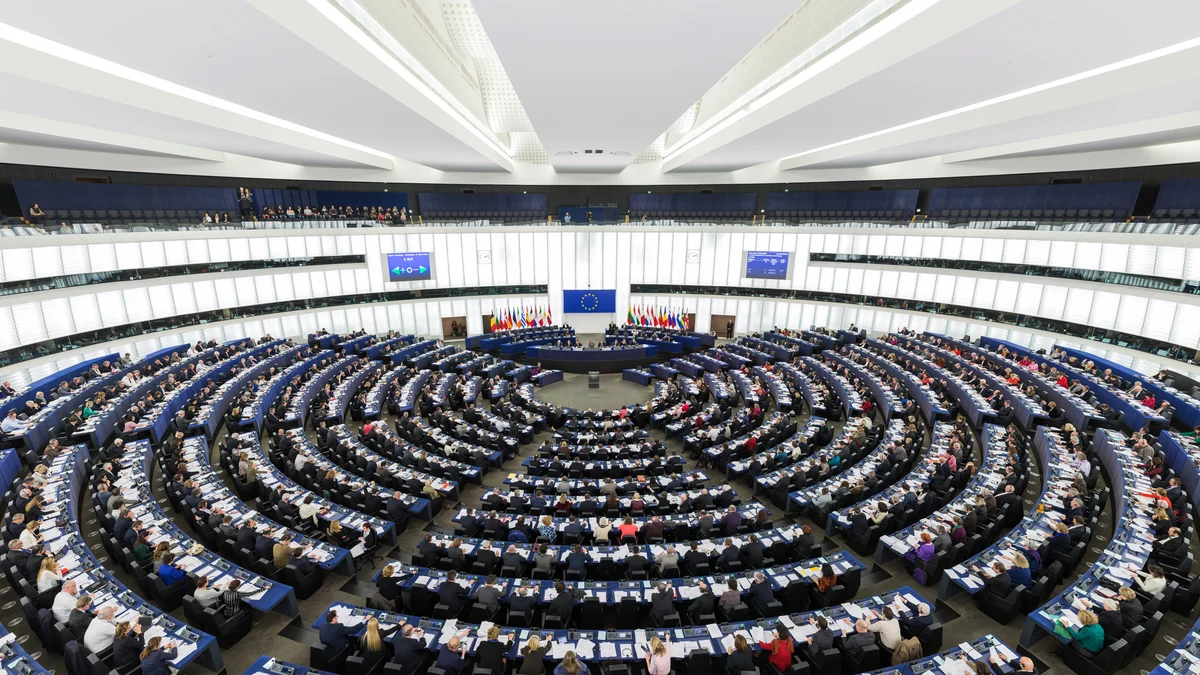
Photo: Wikimedia Commons / Creative Commons
The Widening Atlantic Divide in Technology Policy
For decades, transatlantic diplomacy between the United States and the European Union maintained a functional regulatory consensus across internet infrastructure, intellectual property, and trade standards. While frictions emerged over privacy regulations (GDPR) and digital market taxation, the underlying technological stack remained globally harmonized.
In the final quarter of 2026, that consensus has shattered over the governance of frontier artificial intelligence.
In Brussels and Strasbourg, the European AI Office has begun active enforcement of the General-Purpose AI (GPAI) Codes of Practice, translating the statutory mandates of the EU AI Act into binding compliance roadmaps. Global model providers operating within the European Single Market face statutory obligations governing copyright transparency, energy metrics, systemic risk evaluations, and mandatory state audits, enforced by financial penalties of up to €35 million or 7% of worldwide turnover.
Simultaneously, across the Atlantic, the United States executed the White House Accord on Super Intelligence on September 29, 2026. The American doctrine explicitly rejects statutory pre-market licensing, relying instead on voluntary corporate commitments, board-level safety oversight, and independent third-party red-teaming, while actively deregulating energy infrastructure to accelerate domestic compute dominance.
This structural divergence leaves multinational enterprise architects, cloud operators, and model providers navigating a treacherous dual-track legal reality.
Inside the EU GPAI Code of Practice
The EU AI Act classifies artificial intelligence models into risk tiers, with specialized statutory obligations reserved for General-Purpose AI models with systemic risk (defined as models trained with cumulative compute exceeding 10^25 FLOPs or possessing broad transformative capabilities).
The newly operational Codes of Practice enforce four mandatory compliance pillars:
1. Comprehensive Copyright Training Registries
Unlike in the United States, where model developers rely heavily on broad “fair use” legal doctrines to scrape public web content, the EU Code of Practice mandates granular transparency:
- Detailed Data Provenance Summaries: Providers must publish exhaustive registries detailing the web domains, published texts, datasets, and commercial media utilized in pre-training.
- Opt-Out Respect Verification: Providers must demonstrate mathematically and algorithmically that their crawling infrastructure respected robots.txt directives and automated copyright opt-out tags under Article 4(3) of the EU Copyright Directive.
2. Mandatory Standardized Model Evaluations (Red-Teaming)
Prior to deploying a GPAI model in the European Union, developers must submit standardized evaluation reports to the European AI Office. Unlike voluntary US audits, the EU evaluations are supervised by accredited European Union testing facilities, assessing model capabilities in biological threat synthesis, cyber-offense, and societal disruption.
3. Energy & Resource Efficiency Disclosures
In alignment with the European Green Deal, providers must calculate and disclose the total electricity consumption (in megawatt-hours), water consumption for datacenter cooling, and Scope 1-3 greenhouse gas emissions incurred throughout the training lifecycle of the model.
Comparative Legal Matrix: Washington vs. Brussels
| Regulatory Parameter | United States (White House SI Accord) | European Union (EU AI Act & GPAI Code) | Operational Impact |
|---|---|---|---|
| Legal Mechanism | Voluntary agreement & executive order | Binding statutory regulation & criminal/civil penalties | EU enforcement backed by massive financial penalties |
| Copyright & Training Data | Fair Use doctrine favored in federal courts | Mandatory training data registries & opt-out compliance | Western models must scrub unverified European content |
| Penalties for Non-Compliance | Loss of federal procurement access | Up to €35M or 7% global turnover | Existential financial liability for global tech giants |
| Datacenter Energy Approvals | Fast-track nuclear SMR & natural gas permitting | Strict PUE caps & renewable energy mandates | Compute buildouts accelerate in US; EU faces energy delays |
The Dual-Stack Compliance Strategy for Enterprise Architects
For global technology organizations operating across both North America and Europe, maintaining a single monolithic AI architecture is no longer legally or operationally viable. Leading enterprises are implementing a Dual-Stack Compliance Architecture:
- The US Stack (Speed & Frontier Iteration): Operates on high-density domestic cloud regions, leveraging the latest frontier model weights (GPT-6 Astra, Llama 3.2, Claude 3.5 Sonnet) and always-on autonomous agent swarms under voluntary board oversight.
- The European Stack (Deterministic Conformity): Operates within isolated European datacenters (Frankfurt, Paris, Dublin). All models deployed are certified GPAI-compliant checkpoints with verified copyright summaries, automated C2PA cryptographic watermarking, and continuous data residency enclaves.
The Threat of Transatlantic Regulatory Balkanization
The divergence between Brussels and Washington threatens to split the global open-source software movement. Under the EU GPAI Code of Practice, developers who release open-weight models with cumulative compute exceeding the systemic risk threshold are legally classified as ‘providers’ and must maintain full statutory documentation, regardless of whether the model was released for free as open-source.
In the United States, the White House Accord explicitly protects open-weight distribution as a vital pillar of American technological leadership:
- Leading US open-source champions (Meta, Hugging Face, Mistral US) have warned that prescriptive European compliance requirements could force them to geoblock future frontier model weight releases from European IP addresses.
- Such a split would leave European startups and universities reliant on older, quantized models or forced to license closed proprietary APIs from American hyperscalers, ironically undermining the European Union’s goal of digital strategic autonomy.
- Concurrently, multinational technology corporations must establish independent legal subsidiaries in Dublin or Amsterdam to insulate parent organizations from extraterritorial regulatory fines.
The Brussels Effect in Enterprise Software Procurement
Historically, European regulatory standards have exerted a powerful extraterritorial influence known as the ‘Brussels Effect’—where multinational corporations adopt strict EU standards globally rather than maintaining separate localized products.
However, in frontier artificial intelligence, the Brussels Effect is encountering severe resistance. American hyperscalers and semiconductor manufacturers, backed by the White House Accord, view compliance with onerous European copyright and data registries as commercially untenable. If the European Union continues to impose rigid pre-market restrictions, industry analysts project that European enterprises will face a widening ‘compute and capability gap,’ lagging their American and Asian counterparts in agentic deployment and productivity gains.
Consequently, multinational technology executives are advising corporate boards to adopt an agile posture: establishing technical sandboxes within European data regions to maintain local commercial compliance, while aggressively driving frontier autonomous agent development across less restrictive jurisdictions in North America and Asia.
Strategic Guidance for Enterprise Engineering Leaders
Transatlantic Enterprise Action Plan
- Implement Automated Watermarking Across All Generative Assets: Deploy verifiable C2PA metadata embedding across all synthetic text, image, and audio outputs to comply with Article 50 of the EU AI Act before the statutory deadline.
- Isolate European Customer Telemetry: Ensure that corporate data from EU subsidiaries never transits US-hosted training pipelines, utilizing certified sovereign cloud enclaves to prevent cross-border regulatory exposure.
- Review Model Vendor Indemnity Clauses: Examine enterprise contracts with AI model vendors (OpenAI, Microsoft, Anthropic, AWS) to confirm that the vendor provides full legal indemnification against European copyright and GPAI non-compliance claims.
Primary Citations & Technical References
- European Commission. (2026). Regulation (EU) 2024/1689: Harmonised Rules on Artificial Intelligence (Artificial Intelligence Act). Official Journal of the European Union.
- European AI Office. (October 2026). General-Purpose AI (GPAI) Code of Practice Working Group Directives. European Commission DG CONNECT, Brussels.
- Executive Office of the President of the United States. (September 29, 2026). Joint Commitment on Frontier Responsibilities: The White House Accord on Super Intelligence. Washington, D.C.
- Stanford Institute for Human-Centered Artificial Intelligence (HAI). (2026). Navigating Transatlantic Divergence: The Technical and Legal Realities of AI Regulation. Stanford University Policy Report.