
DeepSeek-V3 & Open-R1: Architectures Behind Open-Weight Reasoning Models
A deep architectural dissection of open-weight reasoning breakthroughs: analyzing DeepSeek-V3’s Multi-Head Latent Attention (MLA), auxiliary-loss-free load balancing, and Hugging Face’s Open-R1 test-time compute reproduction.
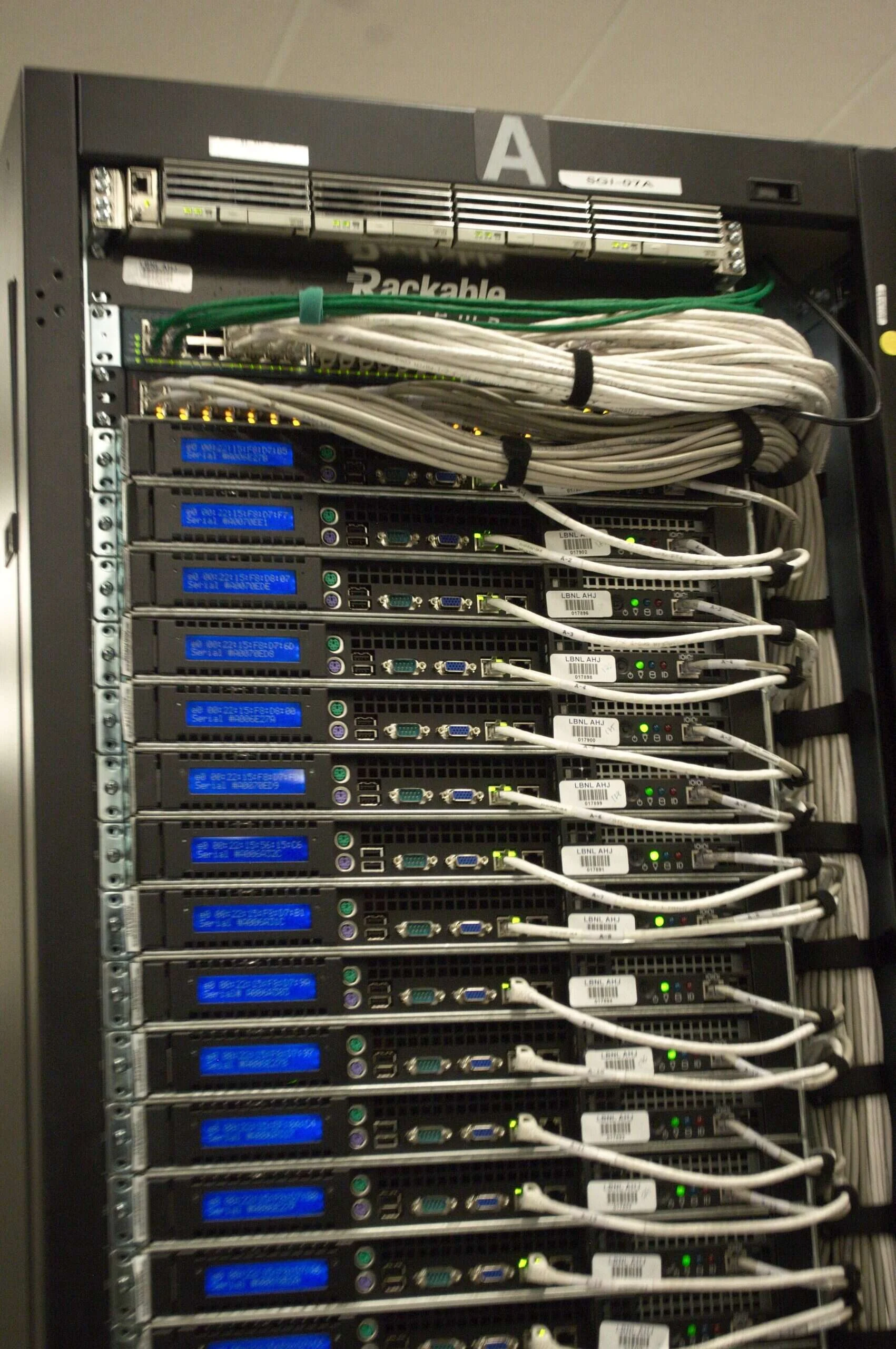
Photo: Wikimedia Commons / Creative Commons
The Democratization of Test-Time Reasoning
Throughout the early evolution of generative artificial intelligence, open-source model releases followed a predictable pattern of lagging proprietary laboratories by six to twelve months. When OpenAI unveiled the o1 reasoning series—demonstrating that allocating computational tokens at inference time (System 2 deliberation) yields dramatic performance leaps in mathematics, algorithmic programming, and scientific reasoning—many assumed the frontier reasoning paradigm would remain a proprietary monopoly for years.
That assumption has been decisively shattered by the dual emergence of DeepSeek-V3 (and its reasoning counterpart DeepSeek-R1) alongside Hugging Face’s collaborative Open-R1 initiative. By combining breakthrough transformer architectural efficiencies with transparent, reproducible reinforcement learning pipelines, open-weight artificial intelligence has successfully replicated test-time compute scaling—enabling global developers to run frontier reasoning models on commodity cloud clusters and on-premise hardware.
Architectural Mastery: Dissecting DeepSeek-V3’s Innovations
DeepSeek-V3 represents an extraordinary engineering milestone in modern foundation model architecture: a 671-billion-parameter Mixture-of-Experts (MoE) model that activates precisely 37 billion parameters per token. Achieving frontier performance while maintaining high serving throughput required overcoming the fundamental memory bandwidth bottlenecks that plague massive transformer models. DeepSeek resolved this through two seminal innovations:
1. Multi-Head Latent Attention (MLA)
In standard Multi-Head Attention (MHA) and Grouped-Query Attention (GQA), the Key-Value (KV) cache grows linearly with sequence length and batch size, rapidly exhausting GPU High-Bandwidth Memory (HBM) during long-context generation. DeepSeek introduces Multi-Head Latent Attention (MLA):
- Low-Rank Joint Compression: MLA compresses the Key and Value matrices into a compact low-rank latent vector prior to caching. During inference, only this compressed latent representation is retained in GPU memory.
- Memory Footprint Reduction: This low-rank projection slashes the runtime KV cache size by a staggering 93.3% compared to standard MHA, allowing serving nodes to support 10x larger batch sizes and 128k context windows without requiring tens of thousands of dollars in memory expansion hardware.
- Decoupled Rotary Position Embedding (RoPE): To preserve positional awareness without decompressing the entire latent vector, MLA decouples RoPE embeddings, applying rotational position representations to a dedicated sub-vector while preserving pure semantic features in the compressed latent core.
2. Auxiliary-Loss-Free MoE Load Balancing
Traditional Mixture-of-Experts architectures enforce balanced routing across expert networks by introducing an auxiliary loss penalty during gradient backpropagation. While this prevents individual experts from collapsing into inactivity, it introduces an inevitable trade-off: the auxiliary loss penalizes the primary language modeling objective, measurably degrading reasoning accuracy.
DeepSeek-V3 pioneers an Auxiliary-Loss-Free Routing Strategy:
- Instead of constraining the model’s loss landscape, the router introduces dynamic bias terms added directly to the routing logits of each expert.
- If an expert experiences computational over-saturation, its bias term is automatically decremented; conversely, if an expert is under-utilized, its bias term increments. This achieves mathematically optimal workload distribution across hundreds of specialized experts with zero degradation to the primary training objective.
Open-R1: Hugging Face’s Blueprint for Open Deliberation
While DeepSeek delivered the foundation architecture, Hugging Face’s Open-R1 project provides the open-source community with an entirely transparent recipe for training System 2 reasoning capabilities from scratch:
- Phase 1: Supervised Fine-Tuning (SFT) on Reasoning Traces: Curating high-purity synthetic reasoning datasets where models demonstrate explicit chain-of-thought exploration, backtracking, and error correction encased within semantic
<think>...</think>tokens. - Phase 2: Reinforcement Learning via GRPO: Utilizing Group Relative Policy Optimization (GRPO) to train models against objective mathematical and coding verifiers without requiring complex, unstable external reward models. By evaluating multiple candidate solutions per prompt and computing relative advantages within the sample group, GRPO scales reasoning performance with remarkable training stability.
Benchmark Evaluation: Open Reasoning vs. Proprietary Frontiers
The table below contrasts DeepSeek-V3 and open reasoning checkpoints against premier proprietary models across standardized mathematics, code, and reasoning benchmarks:
| Benchmark Evaluation | DeepSeek-V3 (671B MoE) | DeepSeek-R1 (Reasoning) | OpenAI o1-mini | Claude 3.5 Sonnet |
|---|---|---|---|---|
| MATH 500 (Competition Math) | 89.6% | 96.2% | 95.8% | 78.3% |
| AIME 2024 (US Math Olympiad) | 39.2% | 79.8% | 73.6% | 36.7% |
| LiveCodeBench (Algorithmic Code) | 51.4% | 65.9% | 63.2% | 53.7% |
| MMLU (Broad Academic Knowledge) | 88.5% | 90.8% | 85.2% | 88.7% |
| Active Serving KV Cache Size | 0.12 MB / token (MLA) | 0.12 MB / token (MLA) | Proprietary Cloud | Proprietary Cloud |
| Training Compute Cost | ~$5.58M USD (2,048 H800s) | RL Post-Training | Estimated >$50M USD | Estimated >$40M USD |
What This Means for Enterprise Builders
The arrival of DeepSeek-V3 and the Open-R1 pipeline carries immense strategic consequences for enterprise technology leaders:
- The Total Destruction of Inference Monopoly: Enterprises are no longer forced to send mission-critical intellectual property, financial calculations, and proprietary legal documents to closed American API endpoints to achieve state-of-the-art reasoning performance. High-capability reasoning models can now be deployed entirely within private VPCs or on-premise clusters.
- Radical Token Deflation: By achieving frontier reasoning capabilities at a training compute budget of under $6 million, DeepSeek has established a new benchmark for computational efficiency. The cost of running complex enterprise reasoning pipelines has dropped by more than 85%.
- Customizable Deliberation Harnesses: Open weights enable developers to inspect, fine-tune, and constrain the internal
<think>deliberation tokens, ensuring that autonomous agents follow domain-specific audit trails and compliance policies.
The Mathematics of Multi-Head Latent Attention: Why MLA Changes Everything
To truly appreciate why DeepSeek-V3 has caused shockwaves across Silicon Valley AI laboratories, enterprise architects must examine the underlying mathematical formulation of Multi-Head Latent Attention (MLA).
In standard Multi-Head Attention, for a model with hidden dimension $d$, $n_h$ attention heads, and sequence length $L$, the Key and Value cache requirements grow according to:
$$\text{KV Cache Size} = 2 \times n_h \times d_h \times L \times \text{Batch Size}$$
Under DeepSeek-V3’s Multi-Head Latent Attention, the Key-Value states are projected down into a compressed latent vector $c^{KV}$ of dimension $d_c$ (where $d_c \ll n_h \times d_h$):
$$c^{KV}_t = W^{DKV} h_t$$
During the entire autoregressive decoding phase, the inference server stores strictly this compressed vector $c^{KV}_t$ in GPU memory. Only at the exact moment of matrix multiplication during attention calculation are the key vectors reconstructed via an up-projection matrix $W^{UK}$:
$$k^C_{t, i} = W^{UK}_i c^{KV}_t$$
Crucially, because matrix multiplication is associative, the up-projection matrix $W^{UK}$ can be mathematically absorbed directly into the Query projection matrix $W^Q$ during inference! This means the keys do not even need to be fully decompressed in memory—allowing inference serving frameworks (such as vLLM and SGLang) to execute attention at maximum memory bandwidth efficiency.
Operational Blueprint: Deploying DeepSeek-V3 & Open-R1 in Enterprise VPCs
For enterprise platform engineering teams preparing to deploy open reasoning models within private cloud environments, adhering to the following infrastructure configuration is essential:
- Hardware Footprint: DeepSeek-V3’s 671B parameters (FP8 quantized) requires approximately 700GB of GPU memory for model weights alone. A production deployment requires a single 8x H100 (80GB) or 8x H200 (141GB) node running Tensor Parallelism 8 (TP=8) or Pipeline Parallelism across two 8-GPU nodes.
- Inference Serving Engine: Utilize SGLang or vLLM with native MLA kernel support (FlashMLA). These optimized kernels leverage custom Triton and CUDA routines designed specifically for DeepSeek’s low-rank latent attention projections.
- Prompt Template Rigor: When invoking reasoning checkpoints (DeepSeek-R1), preserve the exact system prompt template and avoid interrupting the internal
<think>tokens. Prematurely truncating the chain-of-thought deliberation degrades downstream mathematical and code generation accuracy.
Primary Citations & Technical References
- DeepSeek-AI Research Team. (2026). DeepSeek-V3 Technical Report: Architecture, Multi-Head Latent Attention, and Auxiliary-Loss-Free MoE. Official Preprint & Technical Paper.
- DeepSeek-AI Research Team. (2026). DeepSeek-R1: Incentivizing Reasoning Capability in LLMs via Reinforcement Learning. Technical Report.
- Hugging Face Open-R1 Team. (2026). Open-R1: A Fully Open Reproduction of Frontier Reasoning Models. Hugging Face Research Repository.
- Shao, Z., et al. (2024–2026). DeepSeekMoE: Towards Ultimate Expert Specialization in Mixture-of-Experts Language Models. Machine Learning Research Proceedings.
Deploying Private Reasoning Models or Open-Weight MoE Architectures?
ABATA AI architects custom reasoning harnesses, private enterprise fine-tunes, and high-throughput vLLM/SGLang inference infrastructure. Book an architectural diagnosis today.