
Global AI Clean Energy Coalition: Hyperscalers Pledge 25GW Fusion & Enhanced Geothermal by 2032
Confronting the immense electricity consumption of frontier foundation model training clusters, the world’s leading technology hyperscalers have ratified the Global AI Clean Energy Coalition, pledging 25 gigawatts of zero-carbon baseload fusion and enhanced geothermal power by 2032.
The Collision of Artificial Intelligence and the Thermodynamic Reality
The exponential scaling of frontier artificial intelligence has collided with the physical reality of global electrical power infrastructure. Over the past four years, the computing capacity dedicated to training foundation models and running high-throughput enterprise inference has surged by more than 1,000%. Where state-of-the-art datacenters historically drew 20 to 50 megawatts of electricity, the newest generation of gigawatt-scale AI computing campuses—designed to house over 250,000 next-generation accelerators—require continuous, uninterrupted power allocations rivaling the electricity consumption of major metropolitan cities like San Francisco or Manchester.
This insatiable demand for electricity has placed immense stress on regional utility grids across North America, Europe, and Asia. In regions like Northern Virginia, Ireland, and Frankfurt, local grid operators have imposed multi-year moratoria on new datacenter grid interconnections, warning that unconstrained compute demand threatens to crowd out residential electrification and force the reactivated burning of coal and natural gas peaker plants. For technology corporations that have staked their corporate reputations on net-zero carbon pledges, the prospect of powering artificial superintelligence with fossil fuels represents an existential strategic and ethical crisis.
To decisively dismantle this bottleneck, a historic alliance comprising Microsoft, Google, Amazon, Meta, and sovereign infrastructure funds has formed the Global AI Clean Energy Coalition (GACEC). Unveiled at an international energy summit in Reykjavik, the coalition commits an unprecedented $85 billion in upfront capital expenditure and long-term advance market commitments (AMCs) to commercialize 25 gigawatts of firm, zero-emission baseload power—specifically focused on deep enhanced geothermal systems (EGS) and commercial nuclear fusion—by 2032.
The Baseload Imperative: Why Wind and Solar Are Insufficient
While technology hyperscalers have historically been the world’s largest corporate purchasers of solar and wind power purchase agreements (PPAs), intermittent renewables cannot satisfy the operational realities of frontier AI datacenters. Frontier model training runs execute uninterrupted for months at a time across tightly synchronized GPU clusters. If transmission voltage sags or if power is severed for even a fraction of a second, distributed training checkpoints crash, corrupting gigabytes of in-flight gradients and wasting millions of dollars in compute time.
Furthermore, relying on battery storage to bridge multi-day solar and wind lulls during cloudy, windless weather events (known as ‘Dunkelflaute’) is economically and chemically unviable at gigawatt scale. AI datacenters require 24/7/365 firm baseload electricity: continuous, unbreakable, high-voltage power with 99.999% availability. The coalition’s strategic roadmap therefore pivots decisively away from intermittent weather-dependent resources toward deep subterranean thermal energy and magnetic confinement fusion.
Advance Market Commitment: De-Risking Deep Earth Exploration
The GACEC pledge utilizes the historic Advance Market Commitment (AMC) financing mechanism: coalition members guarantee to purchase 25GW of electricity at fixed strike prices from certified advanced baseload projects, guaranteeing long-term revenue to unlock tens of billions in commercial debt financing for deep geothermal and fusion startups.
Enhanced Geothermal Systems (EGS): Tapping the Earth’s Core
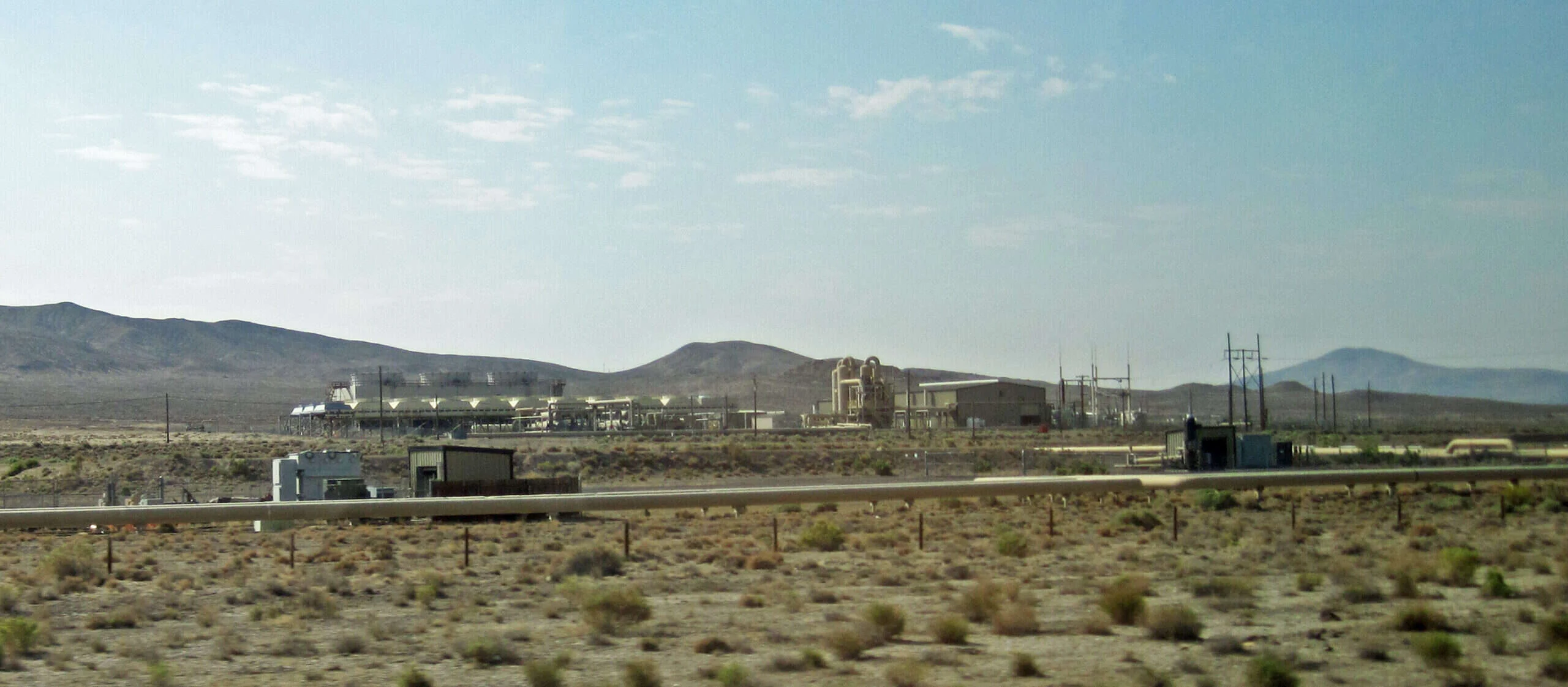
The cornerstone of the coalition’s near-term deployment roadmap is Enhanced Geothermal Systems (EGS). Traditional geothermal power was geographically restricted to rare, naturally occurring volcanic fissures and geysers in places like Iceland and New Zealand. EGS liberates geothermal energy from regional geography by adapting advanced directional drilling and hydraulic fracturing technologies pioneered in the petroleum industry to drill three to five kilometers into hot, dry crystalline basement rock anywhere on the globe.
Cold water is injected under controlled pressure to open microscopic fractures in the subterranean rock, absorbing heat from thermal reserves exceeding 250 degrees Celsius before returning to the surface as superheated steam to drive high-efficiency closed-loop ORC (Organic Rankine Cycle) turbines. The coalition has already finalized anchor off-take agreements with leading EGS developers (such as Fervo Energy and Eavor) to construct dedicated 500MW to 2GW geothermal power campuses co-located directly adjacent to major new AI compute facilities in Nevada, Utah, and western Texas.
| Clean Energy Source | Capacity Factor | Levelized Cost of Energy (LCOE) | Land Footprint per GW | Deployment Timeline |
|---|---|---|---|---|
| Utility-Scale Solar + 4h Battery | 24% – 32% (Intermittent) | $68 – $95 per MWh | ~5,000 acres per GW | Immediate commercial scale |
| Offshore Wind | 42% – 52% (Variable) | $85 – $120 per MWh | ~8,000 acres per GW | 3–5 year development cycle |
| Enhanced Geothermal (EGS) | 95% – 98% (Firm Baseload) | $55 – $75 per MWh (Target) | ~40 acres per GW | 2027–2029 commercial scaling |
| Commercial Nuclear Fusion | 99.2% (Continuous Baseload) | $45 – $65 per MWh (Projected) | ~25 acres per GW | 2030–2032 Day-Zero grid delivery |
Nuclear Fusion: The Holy Grail of Sovereign AI Compute
While enhanced geothermal provides the firm bridge through the late 2020s, the coalition’s ultimate destination is commercial nuclear fusion. Unlike nuclear fission, which produces long-lived radioactive waste and requires complex political licensing, magnetic confinement and laser-inertial fusion generate zero long-lived transuranic waste, carry zero meltdown risk, and utilize virtually inexhaustible fuel derived from seawater (deuterium) and lithium.
The coalition has committed $22 billion in milestone-based venture debt and advance power contracts to leading fusion enterprises, including Commonwealth Fusion Systems (CFS), Helion Energy, and TAE Technologies. Under the terms of the agreement, the first commercial net-electricity fusion reactor (the SPARC/ARC tokamak series) is scheduled to deliver 400 megawatts of clean electricity to a dedicated hyperscaler cloud campus by 2031. Co-locating fusion reactors directly within AI datacenter campuses completely eliminates long-distance transmission line interconnection queues, providing an islanded, sovereign energy supply immune to national grid disruptions.
Regulatory Harmonization and Sovereign Fast-Track Permitting
Achieving 25 gigawatts of advanced clean baseload within six years requires unprecedented regulatory reform. In conventional utility frameworks, permitting a new power generation facility and securing grid transmission rights routinely consumes seven to ten years of bureaucratic environmental reviews. The coalition is working in direct alignment with the US Federal Energy Regulatory Commission (FERC), the European Commission Directorate-General for Energy, and the International Energy Agency (IEA) to establish ‘Clean Compute Energy Corridors’.
Under these streamlined sovereign corridors, environmental impact reviews for closed-loop EGS and non-fission advanced energy facilities are fast-tracked for completion within 180 days. In exchange, coalition operators pledge that at least 20% of all newly generated clean baseload electricity will be injected back into surrounding municipal residential grids, lowering utility bills for local communities and ensuring that the growth of artificial intelligence directly benefits public welfare.
Conclusion: Powering the Mind of the Future with the Heart of the Earth
The Global AI Clean Energy Coalition marks a profound maturation of the technology industry. For decades, the digital economy operated under the illusion that software was weightless and detached from the physical constraints of the planet. Today, as computational models aspire to solve humanity’s greatest scientific, medical, and environmental challenges, the industry has embraced its responsibility to pioneer the clean energy infrastructure of tomorrow.
By unleashing tens of billions of dollars to unlock the primordial thermal energy of the Earth’s mantle and replicate the power of the stars through nuclear fusion, the builders of artificial intelligence are doing more than securing electricity for GPU racks—they are catalyzing an abundance of clean, limitless power that will sustain human civilization for centuries to come.