
IndiaAI Independent Business Division & CDAC PARAM Rudra: Expanding Sovereign GPU Compute by 18,000 Accelerators
Under the guidance of the Ministry of Electronics and Information Technology (MeitY), the newly established IndiaAI Independent Business Division (IBD) has officially operationalized an expansion of the CDAC PARAM Rudra supercomputing network, adding 18,000 enterprise GPU accelerators to India’s national sovereign compute fabric.
The Sovereign Compute Mandate: Moving Beyond Commercial Cloud Gatekeeping
Access to high-density compute infrastructure has emerged as the definitive geopolitical currency of the artificial intelligence era. For nascent AI startups and academic research institutions across the Global South, commercial hyperscaler cloud pricing often poses an insurmountable barrier to foundational model pretraining. Rented GPU clusters running at commercial rates drain venture capital in months, leaving domestic research ecosystems structurally dependent upon foreign technology providers.
To dismantle this structural vulnerability, the Government of India launched the IndiaAI Mission with a total budgetary outlay exceeding Rs 10,370 crore ($1.25 billion). In late October 2026, MeitY marked a decisive milestone by formalizing the operational autonomy of the IndiaAI Independent Business Division (IBD). Operating as an agile, corporate-style statutory arm within Digital India Corporation, the IBD is tasked with procuring, managing, and democratizing sovereign compute capacity across the nation.
The centerpiece of the IBD’s latest operational milestone is the formal commissioning of 18,000 advanced enterprise GPU accelerators deployed across the Center for Development of Advanced Computing (C-DAC) PARAM Rudra supercomputing grid, interconnecting premier research laboratories across Pune, Delhi, Bengaluru, and Chennai.
Architectural Topology: The PARAM Rudra High-Performance Cluster
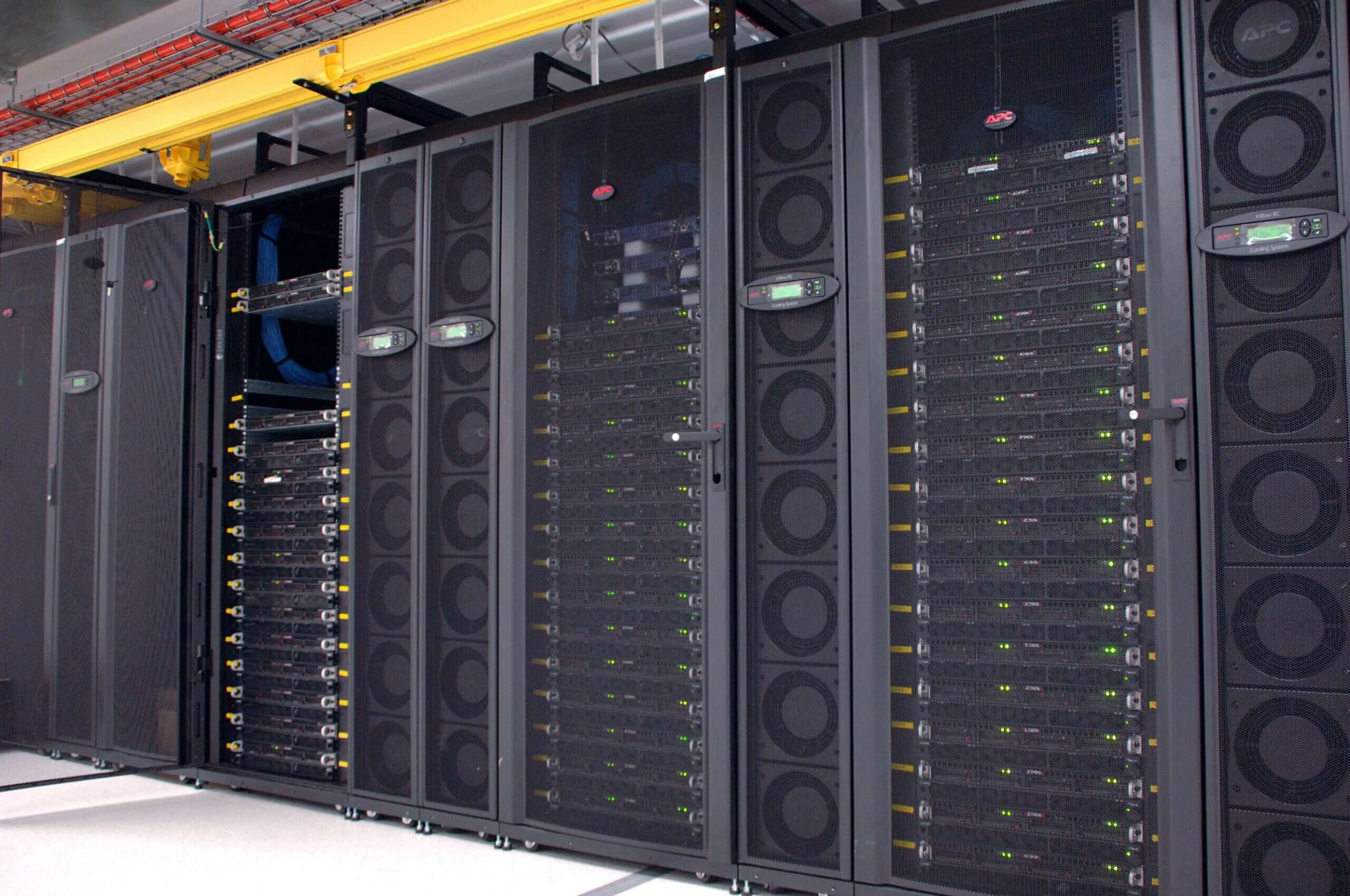
The PARAM Rudra supercomputing expansion is not a single monolithic server room; it is an ultra-dense, distributed exascale-ready compute mesh connected via the National Knowledge Network (NKN) over dedicated optical 100Gbps links. Engineered and integrated domestically by C-DAC engineers, the infrastructure combines imported frontier accelerator silicon with indigenous liquid-cooling, chassis power distribution, and cluster management software.
The 18,000-accelerator deployment is divided across three specialized operational tiers:
- Tier-1 Foundation Pretraining Hub (C-DAC Pune): A centralized dense cluster of 10,000 liquid-cooled 80GB and 144GB high-bandwidth memory accelerators interconnected via 3.2Tbps optical InfiniBand fabric, dedicated strictly to training 70B+ parameter Indic multimodal foundation models.
- Tier-2 Distributed Fine-Tuning & RL Nodes: Regional clusters of 2,000 accelerators each situated at IIT Delhi, IIT Bombay, IIT Madras, and IISc Bengaluru, optimized for domain-specific post-training in healthcare, agriculture, climate modeling, and legal automation.
- Tier-3 National Inference API Gateway: A fault-tolerant public cloud inference layer hosting quantized sovereign models, providing low-latency API access to Indian startups and government digital service applications.
- Indigenously Engineered Direct-to-Chip Liquid Cooling: Custom cooling distribution units (CDUs) engineered by C-DAC maintain coolant flow across dense server blades, achieving a world-class Power Usage Effectiveness (PUE) of 1.15 even in Pune’s tropical summer climate.
Subsidized Compute Economics: Under the IndiaAI IBD framework, verified Indian startups, university researchers, and public welfare developers can apply for GPU grant vouchers that subsidize up to 80% of compute costs, reducing the effective hourly rental cost of frontier GPU nodes to under $0.65 per hour.
The Unified Cloud Management Platform (CMP): Frictionless Developer Access
A frequent historical criticism of public supercomputing facilities has been bureaucratic friction. Academic portals often required lengthy paper-based approval cycles, manual SSH key exchanges, and outdated SLURM job submission interfaces that discouraged modern machine learning teams accustomed to agile cloud developer experiences.
The IndiaAI IBD has completely modernized this user journey through the launch of the IndiaAI Cloud Management Platform (CMP). The CMP operates as a modern cloud dashboard offering one-click JupyterLab environments, containerized PyTorch and vLLM runtimes, automated Slurm-to-Kubernetes bridges, and integrated Hugging Face model mirrors hosted within Indian borders.
Startups can submit automated compute proposals through the CMP. Machine-learning evaluation committees review algorithmic architectures, dataset provenance, and societal impact metrics, issuing approved GPU hour allocations directly to the developer’s digital wallet within 72 hours of submission.
Indigenous High-Performance Interconnects: The Trinetra Network Fabric
A persistent vulnerability in national supercomputing infrastructure has been dependence on foreign proprietary optical interconnect standards. To mitigate this risk, C-DAC engineers have deployed the pilot rollout of the Trinetra interconnect fabric on select PARAM Rudra sub-clusters. Operating over standard Ethernet hardware using specialized low-latency RDMA (RoCEv2) protocols, Trinetra provides microsecond-level point-to-point packet delivery with adaptive multipath routing.
This network innovation ensures that large-scale all-reduce gradient synchronizations during distributed transformer training run without bandwidth chokepoints or packet drops, demonstrating that open standards can successfully match proprietary interconnect performance in sovereign supercomputing clusters.
Comparative Overview: National Sovereign AI Compute Initiatives
| National Initiative | Managing Entity | Total Public Compute Allocation | Primary Strategic Focus | Access Model |
|---|---|---|---|---|
| IndiaAI PARAM Rudra Mesh | MeitY / IndiaAI IBD & C-DAC | 18,000 Enterprise GPUs | Indic Multilingual & Public Good AI | Subsidized Voucher Allocation (CMP) |
| US National AI Research Resource (NAIRR) | NSF / DOE | Heterogeneous Cloud Credits ($2.4B) | Academic & Basic Science Research | Peer-Reviewed Research Grants |
| EuroHPC JU AI Factories | European Commission | Exascale Supercomputing (LUMI/MareNostrum) | Sovereign European Enterprise & Science | Consortium Resource Bidding |
| UK AI Research Resource (AIRR) | UKRI / University of Bristol | 5,400 Isambard-AI Accelerators | Frontier AI Safety & Climate Physics | National Academic Allocation |
| Japan ABCI (AIST) | METI / AIST | 4,000+ High-Performance Nodes | Industrial Robotics & Japanese LLMs | Commercial-Academic Mixed Leasing |
Indigenous Language Datasets and the Bhashini Integration
Hardware compute is powerless without representative training corpora. A critical mandate of the IndiaAI IBD is the end-to-end integration of PARAM Rudra compute with the Bhashini language repository, curated under the National Language Translation Mission.
Over 1.8 petabytes of verified, high-quality audio recordings, literary texts, parliamentary proceedings, and regional news broadcasts covering all 22 scheduled Indian languages have been pre-processed, tokenized, and stored on high-speed NVMe storage arrays directly attached to the Pune supercomputer. This provides domestic research consortia with immediate high-throughput data access, enabling the training of natively multimodal Indic models that understand dialect nuances, code-switching, and cultural context far better than foreign web-scraped models.
Air-Gapped Sovereign AI Enclaves and Security Hardening
A vital dimension of the PARAM Rudra expansion is the creation of specialized air-gapped sovereign AI partitions dedicated to high-assurance national security and critical infrastructure modeling. Research workloads evaluating nuclear energy simulation, defense avionics, and national power grid telemetry run within mathematically isolated hardware partitions completely severed from public internet routing.
Physical access controls at C-DAC Pune and regional IIT facilities incorporate biometric multi-factor authentication, EMP-shielded server racks, and cryptographic hardware security modules (HSMs) that manage model weights and training checkpoints with AES-256 GCM encryption. Model artifacts trained within these secure enclaves undergo continuous firmware attestation and supply chain vulnerability scanning, ensuring that India’s mission-critical sovereign intelligence assets remain invulnerable to foreign cyber intrusion or supply chain tampering.
Workforce Empowerment and Academic Upskilling
Beyond capital equipment procurement, the IndiaAI IBD is deploying extensive human capital initiatives. Partnering with the National Institute of Electronics and Information Technology (NIELIT) and premier engineering institutes, the division has funded 500 doctoral fellowships and 2,000 master’s research seats dedicated to high-performance computing, distributed parallel training, and compiler optimization.
Hands-on supercomputing workshops conducted on the PARAM Rudra cluster train undergraduate students in distributed tensor parallelism, CUDA kernel optimization, and PyTorch FSDP (Fully Sharded Data Parallel) workflows, directly expanding the technical talent pipeline needed to sustain India’s high-tech manufacturing and software ambitions.
Conclusion: Catalyzing India’s Deep-Tech Revolution
The operationalization of the IndiaAI Independent Business Division and the expansion of the PARAM Rudra GPU supercomputer marks India’s decisive departure from being purely an algorithmic consumer to an architect of sovereign intelligence. By democratizing compute access, securing indigenous data pipelines, and investing in human engineering excellence, India ensures that its digital future is engineered by Indian minds, trained on Indian silicon, and dedicated to the prosperity of all citizens.