
India’s National AI Safety Institute: MeitY & IIT Delhi Launch Sonipat Enclave
In a major stride for sovereign technological assurance, MeitY and IIT Delhi have officially inaugurated the Indian AI Safety Institute (India AISI), establishing national testing enclaves for frontier model security.
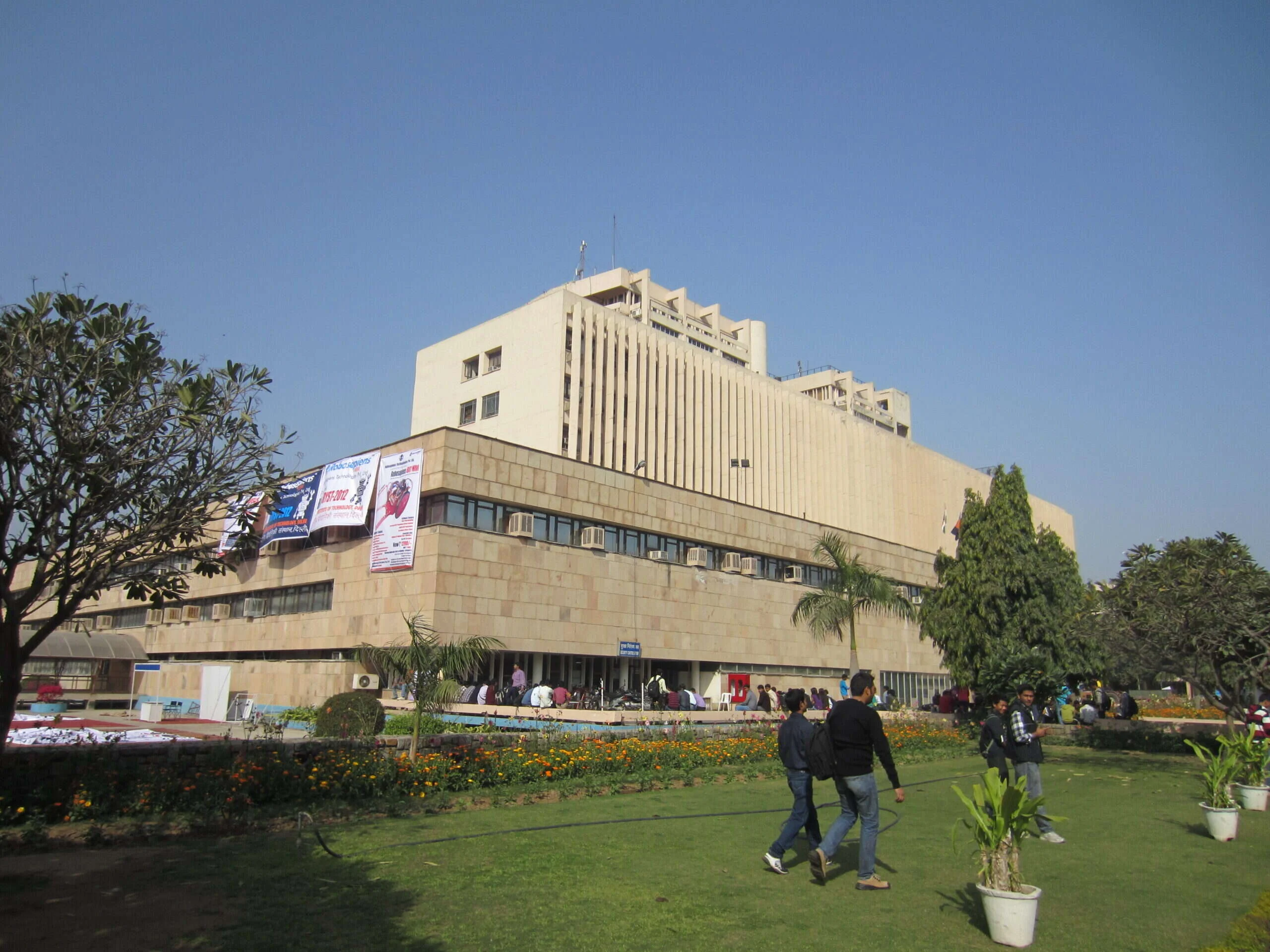
Sovereign Safety Assurance for 1.4 Billion Citizens
As artificial intelligence systems transition from academic research into core public infrastructure—governing citizen identity verification, real-time vernacular payments, healthcare triage, and agricultural advisory services—the societal risks of algorithmic failure escalate dramatically. While Western AI safety institutes have focused primarily on catastrophic existential risks and dual-use cyber-warfare capabilities, emerging economies face distinct, immediate socio-technical challenges.
In India, systemic AI risks encompass election-disrupting hyper-realistic vernacular deepfakes, communal disharmony triggers embedded in multilingual training data, financial voice-clone fraud targeting rural banking consumers, and algorithmic exclusion in welfare distribution systems. Relying on foreign evaluation benchmarks established in London or Washington fails to address these localized demographic vulnerabilities.
On Saturday, October 17, 2026, Union Minister for Electronics and Information Technology Ashwini Vaishnaw officially inaugurated the Indian AI Safety Institute (India AISI). Headquartered at the IIT Delhi Sonipat research park and established with an initial allocation of ₹450 crore under the IndiaAI Mission, India AISI establishes a world-class, sovereign scientific testing enclave dedicated to empirical AI assurance.
The Five Scientific Verticals of India AISI
Operating as an autonomous statutory research institution under MeitY, India AISI organizes its scientific operations across five specialized laboratories:
1. Indic Language Bias & Cultural Guardrails Lab: Dedicated to auditing foundation models across India’s 22 scheduled languages, ensuring that generative models understand nuanced regional idioms without amplifying caste, religious, or linguistic prejudices.
2. Autonomous Cyber-Defense & Red-Teaming Lab: Operates sandboxed offensive AI simulation ranges to stress-test enterprise agents against prompt-injection attacks, supply-chain poisoning, and autonomous lateral network movement.
3. Deepfake Detection & Media Forensics Lab: Develops real-time cryptographic verification APIs and perceptual hashing models to detect synthetic audio and video clones before they enter viral distribution channels.
4. Critical Infrastructure & Financial Safety Lab: Audits automated algorithmic trading models, power grid optimization networks, and conversational payment switches (such as Conversational UPI 2.0) against cascading systemic failure modes.
5. Digital Personal Data Protection (DPDP) Compliance Lab: Evaluates enterprise foundation models to certify that ephemeral inference buffers and vector embeddings comply with statutory consent and data erasure mandates.
The Sonipat Sovereign Testing Enclave: Hardware-Isolated Red-Teaming Ranges
A critical requirement for frontier model safety evaluation is complete physical and cryptographic isolation. If a state-sponsored adversary or an autonomous research model attempts unauthorized privilege escalation during red-teaming, the testing environment must prevent packet leakage into external commercial networks.
The Sonipat testing facility houses a dedicated 512-GPU supercomputing cluster (utilizing NVIDIA H200 accelerators with Confidential Computing enabled) completely air-gapped from the public internet. Frontier developers seeking commercial accreditation in India submit compiled model weights into the enclave via encrypted physical media or point-to-point fiber connections.
Inside the enclave, automated red-teaming harnesses bombard the target model with hundreds of thousands of adversarial attack vectors—spanning automated SQL injection attempts, toxic multilingual roleplay scenarios, and chemical synthesis inquiries. The testing environment features hardware-level out-of-band monitoring that records every GPU register mutation and memory bus transaction, generating an immutable, cryptographically signed Safety Evaluation Certificate.
Alignment with the US-UK-Japan Trilateral AI Safety Matrix
While maintaining complete sovereign operational independence, India AISI has established formal technical bridges with international safety bodies. The institute has harmonized its evaluation taxonomies with the Trilateral Frontier Risk Matrix recently adopted by the United States, United Kingdom, and Japan.
Under this bilateral coordination framework, India AISI participates in standardized cross-border crisis simulations, exchanging anonymized threat intelligence regarding novel zero-day prompt injection exploits and automated social engineering campaigns.
Significantly, India AISI will lead the Global South Multilingual Safety Working Group, assisting partner nations across ASEAN, South Asia, and Africa in establishing localized safety benchmarks tailored for diverse, low-resource linguistic demographics.
The Deepfake Defense Shield: National Media Verification APIs
Addressing the proliferation of synthetic media during regional and national elections, India AISI has launched the Deepfake Defense Shield—a suite of public REST and gRPC APIs available to verified digital news platforms, social media intermediaries, and law enforcement agencies.
The Shield leverages multi-modal spatial-temporal neural networks capable of analyzing subtle physiological anomalies in synthetic video—such as unnatural micro-saccadic eye movements, irregular blood-flow photoplethysmography (PPG) patterns in facial skin, and acoustic phase mismatches in synthesized vocal cords.
Processing incoming media in under 250 milliseconds, the API outputs a confidence authenticity score alongside a tamper heatmap highlighting manipulated frames, empowering platform moderators to quarantine deceptive synthetic clones before viral amplification occurs.
Industry Sandbox: Accelerating Domestic Startup Compliance
To prevent regulatory safety testing from becoming a bottleneck for Indian startup innovation, India AISI operates the National AI Regulatory Sandbox.
Under this initiative, pre-vetted Indian AI startups receive subsidized access to the Sonipat testing enclave, automated vulnerability remediation guides, and expedited statutory certification under the DPDP Act 2023. Startups developing healthcare diagnostics, agricultural voice agents, or autonomous legal tools can test their applications against millions of edge cases before public commercial launch.
Over eighty domestic startups have already enrolled in the sandbox’s inaugural cohort, significantly compressing their enterprise sales cycles by providing prospective corporate clients with government-backed safety certifications.
Academic Synergy: Fostering National AI Safety Engineering Talent
Safety assurance requires deeply specialized scientific talent. In partnership with the Indian Institutes of Technology (IIT Delhi, IIT Bombay, IIT Madras) and the Indian Institute of Science (IISc Bangalore), India AISI has launched the National AI Safety Fellowship.
The program funds 100 doctoral and postdoctoral researchers annually, focusing on formal mathematical verification of neural networks, mechanistic interpretability, and AI alignment. By cultivating domestic expertise in frontier security engineering, India AISI ensures that the nation remains self-reliant in critical national defense and cybersecurity capabilities.
Enterprise Compliance Roadmap: Preparing for India AISI Certification
Enterprise software vendors, cloud hyperscalers, and system integrators operating in India should adapt their compliance workflows to the new safety institute standards:
1. Pre-Deployment Red-Teaming: Incorporate India AISI’s open-source Indic Adversarial Benchmark suite into internal continuous integration (CI/CD) testing pipelines.
2. Enclave Attestation Integration: Prepare enterprise model containers to support remote cryptographic attestation required for Sonipat enclave testing.
3. Deepfake Provenance Headers: Implement C2PA cryptographic metadata signing on all synthetic speech and visual outputs generated by enterprise marketing and customer service tools.
4. Incident Reporting Handlers: Establish formal internal protocols to report critical model security vulnerabilities or unauthorized agent escalations to India AISI within 24 hours.
5. Participate in Sectoral Sandboxes: Apply for sandbox testing slots to validate upcoming fintech, healthcare, and governance AI applications against national security standards.
Cryptographic Provenance Verification & CERT-In Rapid Response SLAs
Under the statutory operating charter established between MeitY and IIT Delhi, India AISI operates an automated 24/7 threat-intelligence pipeline directly connected to the Indian Computer Emergency Response Team (CERT-In). When the Deepfake Defense Shield detects coordinated synthetic disinformation campaigns targeting critical election booths or financial market infrastructure, cryptographic watermarks and perceptual hashes are distributed to major social media intermediaries within 180 seconds, triggering automated content containment across national telecom networks.
Furthermore, all red-teaming evaluations conducted inside the Sonipat 512-GPU enclave emit immutable, tamper-evident audit trails signed with India AISI’s national root key, providing enterprise compliance officers with legally binding assurance documentation recognized by domestic regulatory authorities under the DPDP Act 2023.