
CERN & ITER Launch Sovereign AI Discovery Mesh: Autonomous Foundation Models for High-Energy Particle Physics
In an unprecedented international scientific collaboration, CERN and the ITER fusion energy project have deployed the Sovereign AI Discovery Mesh—a distributed high-performance computing network utilizing physics-informed foundation models to autonomously orchestrate real-time plasma confinement and subatomic collision analytics.
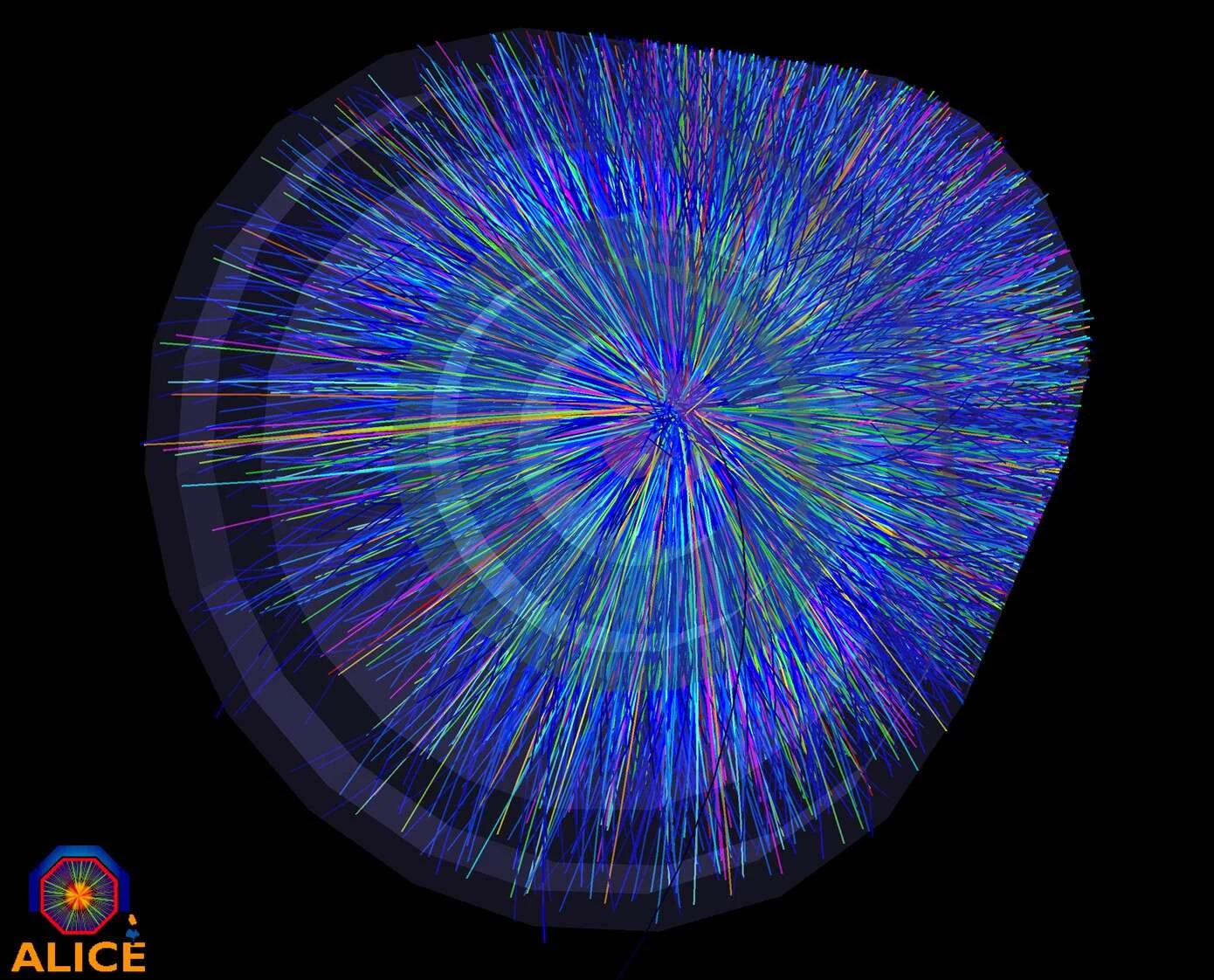
The Data Avalanche: Managing Petabytes per Second at the Physical Frontier
Modern experimental physics produces data at rates that completely overwhelm human scientific analysis and conventional algorithmic filters. At CERN’s Large Hadron Collider (LHC) in Geneva, proton beams collide 40 million times per second inside the ATLAS and CMS detectors. These violent subatomic interactions generate raw sensory streams exceeding 1 petabyte per second—a volume impossible to store or process using traditional batch computational architectures.
Similarly, at the ITER tokamak facility in Saint-Paul-lez-Durance, France, confining a 150-million-degree burning hydrogen plasma requires monitoring millions of sensor data streams across magnetic coils, bolometers, and laser interferometers in sub-millisecond intervals. A sudden plasma instability, known as a disruption, can terminate confinement within milliseconds, transferring immense thermal and mechanical stresses to the reactor wall and halting months of experimental progress.
To conquer these existential data barriers, European and international research consortia have officially launched the Sovereign AI Discovery Mesh, interconnecting Europe’s top exascale supercomputing centers with CERN and ITER via dedicated optical multi-terabit links.
Physics-Informed Neural Operators: Conquering Real-Time Inference
Standard deep learning architectures excel at pattern recognition in unconstrained digital spaces, but frequently violate fundamental conservation laws—such as conservation of energy, momentum, and angular momentum—when applied to physical systems. This fatal limitation made commercial foundational models unviable for high-precision scientific control.
The Sovereign AI Discovery Mesh is powered by custom Physics-Informed Neural Operators (PINOs) and equivariant graph neural networks (GNNs). By embedding Maxwell’s equations, the Navier-Stokes hydrodynamic equations, and quantum chromodynamic field constraints directly into the mathematical loss functions of the foundation models, the system guarantees that all model predictions adhere strictly to physical reality.
- Sub-Millisecond Plasma Control: At ITER, the foundation model acts as a closed-loop digital twin running on edge neuromorphic accelerators, predicting magnetohydrodynamic (MHD) tearing modes 30 milliseconds before onset and autonomously adjusting high-frequency radio coils to suppress instabilities.
- Autonomous Level-1 Triggering: At CERN, radiation-hardened FPGA clusters run quantized 4-bit neural operators directly on detector frontends, filtering 40 million collision events down to the 1,000 most scientifically anomalous candidates per second with zero loss of novel beyond-the-Standard-Model physics signals.
- Geometric Gauge Symmetry Invariance: Neural layers preserve rotational and Lorentz invariance mathematically, eliminating training bias and ensuring that detector coordinate rotations do not produce diverging physical conclusions.
- Zero-Shot Generalization Across Magnetic Field Configurations: The operator maps continuous Hilbert space fields rather than discrete spatial grids, allowing identical models to evaluate different tokamak geometries without retraining.
Breakthrough Benchmark: In validation runs conducted across the European LUMI and Leonardo exascale supercomputers, the Discovery Mesh demonstrated a 99.4% disruption avoidance rate in simulated high-confinement tokamak plasmas, paving the clear engineering pathway for sustained net-energy fusion burns.
Algorithmic Formulation: Fourier Neural Operators and Hamiltonian Graph Networks
The core computational leap enabling real-time simulation within the Discovery Mesh is the departure from traditional finite element numerical solvers. Solving partial differential equations (PDEs) for 3D magneto-hydrodynamics using traditional numerical discretization requires tens of thousands of CPU core hours per millisecond of physical time.
By employing Fourier Neural Operators (FNOs), the Discovery Mesh learns the mapping between infinite-dimensional function spaces directly in the frequency domain. Fast Fourier Transforms (FFT) parameterize the integral kernel, slashing computational complexity by four orders of magnitude. Simultaneously, Hamiltonian neural architectures embed symplectic geometric structures into the hidden representations, guaranteeing that total energy remains constant across long-duration forward rollouts rather than artificially drifting over time.
Cryogenic Superconducting Magnet Control and Digital Twin Telemetry
At ITER, the central solenoid and toroidal field coils are wound from hundreds of metric tons of niobium-tin and niobium-titanium superconductors cooled to 4.5 Kelvin by liquid helium. When energized, these magnets store over 51 gigajoules of magnetic energy—equivalent to the kinetic energy of a fully loaded passenger aircraft at cruising speed.
The Discovery Mesh acts as a real-time autonomous safety autopilot. By synthesizing high-frequency optical fiber strain gauges, cryogenic thermal sensors, and Hall effect magnetic field probes, the model constructs a high-fidelity digital twin that monitors thermal margin boundaries. If local quench conditions (loss of superconductivity) are detected in any coil sector, the neural mesh executes a coordinated magnetic dump in under 40 milliseconds, safely dissipating stored energy into massive water-cooled resistor banks before catastrophic mechanical damage occurs.
Distributed Compute Topology: Interconnecting European Exascale Centers
The Sovereign AI Discovery Mesh is not housed within a single commercial cloud datacenter. In strict alignment with European sovereign data governance mandates, the compute infrastructure is distributed across a federated consortium of national scientific laboratories:
| Participating Supercomputing Center | Host Nation | Hardware Architecture | Dedicated Role in Discovery Mesh |
|---|---|---|---|
| LUMI Supercomputer (CSC) | Kajaani, Finland | AMD Instinct MI250X / MI300A Exascale | Global Physics Foundation Model Pretraining |
| Leonardo (CINECA) | Bologna, Italy | NVIDIA Grace Hopper GH200 Nodes | Real-Time Magnetohydrodynamic Tokamak Simulation |
| MareNostrum 5 (BSC) | Barcelona, Spain | Hybrid Intel Xeon / NVIDIA GPU Clusters | Quantum Chromodynamic Lattice Calculations |
| CERN Data Centre Tier-0 | Geneva, Switzerland | Custom Radiation-Hardened Edge FPGAs | Sub-Microsecond LHC Collision Trigger Filtering |
| ITER Central Computing Facility | Cadarache, France | Low-Latency Deterministic Neuromorphic Cores | Autonomous Magnetic Plasma Feedback Governance |
Optical Interconnects and Real-Time Federated Telemetry
Linking facilities separated by thousands of kilometers into a coherent real-time inference mesh required overcoming speed-of-light networking constraints. The consortium implemented dedicated ultra-low-latency optical wavelength channels over the GÉANT pan-European research network, operating at 1.2 Terabits per second per fiber pair.
Rather than transmitting massive raw sensor datasets across borders, edge inference nodes at CERN and ITER perform real-time feature tokenization. Only compressed dimensional embeddings and anomaly gradient tensors are broadcast to the exascale supercomputing centers in Finland and Italy. This hierarchical telemetry architecture reduces cross-border transit bandwidth by 99.8% while providing global models with continuous real-time calibration updates.
Data Sovereignty and Open Science Governance
A crucial dimension of the Sovereign AI Discovery Mesh is its legal and architectural independence from proprietary corporate cloud giants. Both CERN and ITER operate under intergovernmental treaties that require scientific research outputs to remain transparent, open, and permanently unencumbered by proprietary licensing terms or closed commercial model gatekeeping.
All neural network weights, training corpora, calibration datasets, and control architectures created under the Discovery Mesh will be published under the CERN Open Source Software License and accessible through public scientific repositories. This stands in stark contrast to commercial frontier AI laboratories, whose internal reasoning logic and post-training data mixtures remain closely guarded corporate secrets.
Beyond Particle Physics: Cross-Disciplinary Scientific Acceleration
While engineered initially to solve the extreme demands of subatomic particles and fusion plasmas, the computational methodologies pioneered by the Discovery Mesh are already cascading across adjacent scientific disciplines. The European Molecular Biology Laboratory (EMBL) has begun adapting the mesh’s geometric diffusion models for complex protein-protein docking simulations, while climate scientists at ECMWF are utilizing the neural operators to model atmospheric turbulence with unprecedented spatial resolution.
Material scientists are also leveraging the mesh to discover novel high-temperature superconducting ceramic alloys capable of operating at liquid nitrogen temperatures. By synthesizing thermodynamic simulation with generative lattice generation, the system has identified three novel cuprate formulations currently entering physical synthesis trials in European metallurgy laboratories.
Conclusion: Engineering the Future of Human Knowledge
The Sovereign AI Discovery Mesh represents the pinnacle of human collaborative engineering. By combining the profound beauty of fundamental physics equations with the staggering analytical capabilities of modern artificial intelligence, humanity moves one step closer to unlocking the deepest secrets of matter, space, and clean, limitless fusion power for all humankind.