
Daily AI News: Mistral Large 4 Open Weights Confirmed, IndiaAI Cyber-Guard Launches, AutoPR
Your definitive daily intelligence briefing on frontier artificial intelligence. Today: Mistral AI confirms October 27 open-weight distribution for Mistral Large 4, MeitY deploys the IndiaAI Cyber-Guard fabric, the G7 ratifies the Tokyo Declaration, and AutoPR revolutionizes monorepo CI/CD.
Executive Summary: The Geopolitics and Engineering of Frontier AI
Today, Monday, October 19, 2026, marks a pivotal inflection point in the global artificial intelligence landscape. Across three continents, simultaneous developments in regulatory diplomacy, sovereign cybersecurity, open-source engineering, and enterprise developer infrastructure have converged to reshape the trajectory of the machine intelligence industry. From the ministerial halls of Tokyo to the high-frequency trading colocation facilities of Mumbai, and from Paris’s open-source foundation labs to enterprise software engineering monorepos, today’s developments illustrate that artificial intelligence has fundamentally transitioned from theoretical computer science into the foundational infrastructure of modern civilization.
This comprehensive executive intelligence briefing breaks down the five critical stories defining the industry today, providing the deep technical context, strategic implications, and actionable data required by technology executives, machine learning researchers, and policy leaders navigating the frontier.
1. Mistral Large 4 Open Weights Confirmed for October 27 Following ANSSI Safety Clearance
In a formal press communiqué issued from Paris this morning, Mistral AI confirmed that full model weights for Mistral Large 4 (‘Le Chonk’) will be made publicly available for direct download on Tuesday, October 27, 2026. The announcement follows the successful completion of a mandatory three-week sovereign red-teaming audit conducted jointly by France’s ANSSI, Germany’s BSI, and the European Union AI Office. The auditing authorities verified that the one-trillion-parameter Mixture-of-Experts model satisfies all ASL-3 and ASL-4 containment criteria, confirming that its mathematical alignment guardrails remain stable against adversarial manipulation.
Simultaneously, open-source inference communities released Day-Zero serving configurations for vLLM, SGLang, and TensorRT-LLM. Utilizing breakthrough FP8 block-scaled quantization and FP4 expert execution kernels, enterprise teams will be able to serve the trillion-parameter giant across a single standard 8-GPU node of NVIDIA H200 accelerators or dual nodes of H100s. The release represents a watershed moment for European technological sovereignty, granting global enterprises unrestricted access to a frontier multimodal model without dependency on foreign closed-source API gateways.
Industry Dispatch: vLLM Community Day-Zero Readiness
The vLLM maintainer team has merged PR #14820, introducing dedicated MoE kernel optimizations for Mistral Large 4 that deliver a 3.8x throughput acceleration over baseline runtimes, enabling immediate enterprise production adoption upon weight drop.
2. IndiaAI Cyber-Guard Deployed Across National Financial Exchanges
In a major development for national digital sovereignty, India’s Ministry of Electronics and Information Technology (MeitY) has officially activated the IndiaAI Cyber-Guard threat-hunting fabric across the National Stock Exchange (NSE) and Bombay Stock Exchange (BSE). Operating over air-gapped sovereign compute clusters powered by the national PARAM supercomputer grid, Cyber-Guard ingests over forty terabytes of real-time market telemetry per second, including inter-bank messaging packets, FIX protocol orders, and BGP routing matrices.
Developed collaboratively by C-DAC and IIT Kanpur, Cyber-Guard replaces legacy signature-based intrusion detection with deep neural graph behavioral models that detect novel zero-day exploits and algorithmic market manipulation attempts in just 38 milliseconds. The platform incorporates the Autonomous Containment Orchestrator, utilizing programmable P4 hardware switches to isolate compromised network segments without introducing nanosecond jitter to exchange matching engines. Threat telemetry neutralized at the exchanges is automatically federated across India’s banking backbone via Bharat-CERT, establishing an impenetrable sovereign cyber defense shield.
3. G7 Ratifies the Tokyo Declaration: Binding ASL-4 Safety Thresholds Codified
At a ministerial summit in Tokyo, representatives from the Group of Seven (G7) industrialized democracies finalized and signed the Tokyo Declaration on Frontier Artificial Intelligence. The multilateral treaty establishes binding international definitions for AI Safety Level 4 (ASL-4) systems, defined as models requiring more than 10^26 FLOPs of training compute or demonstrating autonomous cyber-offensive and CBRN weaponization capabilities.
The treaty mandates a 45-day pre-deployment quarantine period during which candidate frontier models must undergo rigorous red-teaming within certified National AI Safety Institutes. Crucially, the agreement establishes Mutual Assessment Recognition (MAR), eliminating redundant cross-border regulatory filings between the United States, the European Union, the United Kingdom, and Japan. The treaty also harmonizes compute governance, establishing cryptographic tracking registries for commercial GPU clusters exceeding 50,000 accelerators to prevent unregulated clandestine training runs.
| Event / Headline | Key Entity | Primary Technical Impact | Global Strategic Milestone |
|---|---|---|---|
| Mistral Large 4 Release | Mistral AI / ANSSI | Trillion-parameter MoE weights open on Oct 27 | European open sovereign AI parity achieved |
| IndiaAI Cyber-Guard | MeitY / C-DAC / NSE | 38ms autonomous neural graph threat hunting | Zero-latency protection of national financial core |
| Tokyo Declaration | G7 Alliance / AISIs | Harmonized ASL-4 safety & 45-day review lockout | First binding multilateral frontier governance treaty |
| AutoPR & OpenCode | Open-Source Community | Hermetic Bazel AST & automated patch synthesis | CI/CD MTTR slashed from 4.2h to 11.4 min |
4. AutoPR and OpenCode Transform Enterprise Monorepo Continuous Integration
In the developer tooling ecosystem, the open-source release of AutoPR and the OpenCode agent framework has taken software engineering forums by storm. Designed to solve the acute bottleneck of continuous integration failures in multi-million-line enterprise monorepos, OpenCode transitions CI pipelines from passive failure reporters into autonomous, self-healing code maintenance fabrics.
By parsing abstract syntax trees, symbol call graphs, and historical regression caches, OpenCode isolates failing test assertions, synthesizes type-checked patches within hermetic Bazel sandboxes, and submits verified pull request suggestions via AutoPR. In enterprise pilot benchmarks, the autonomous pipeline resolved 60.8% of deterministic build failures without human intervention, slashing Mean Time to Recovery (MTTR) from over four hours to just 11.4 minutes while reducing cloud runner billing by 32.4%.
5. Semiconductor Supply Chains Accelerate Blackwell Production Ramps
Reports from Taiwan Semiconductor Manufacturing Company (TSMC) indicate that packaging yields for NVIDIA’s Blackwell B200 and Grace Blackwell GB200 systems have stabilized at commercial scale ahead of initial enterprise rack deliveries scheduled for later this week. Utilizing advanced CoWoS-L (Chip-on-Wafer-on-Substrate with Local Silicon Interconnect) packaging technologies, foundry partners have expanded production allocations to meet massive hyperscaler demand.
The stabilization of advanced packaging yields is critical for the upcoming wave of frontier model deployments, ensuring that the computational capacity required to train next-generation models exceeding 10^27 FLOPs remains on schedule despite stringent global supply constraints. Industry analysts note that hyperscaler capital expenditures dedicated to custom silicon and Blackwell deployments are projected to surpass $210 billion across the upcoming calendar year.
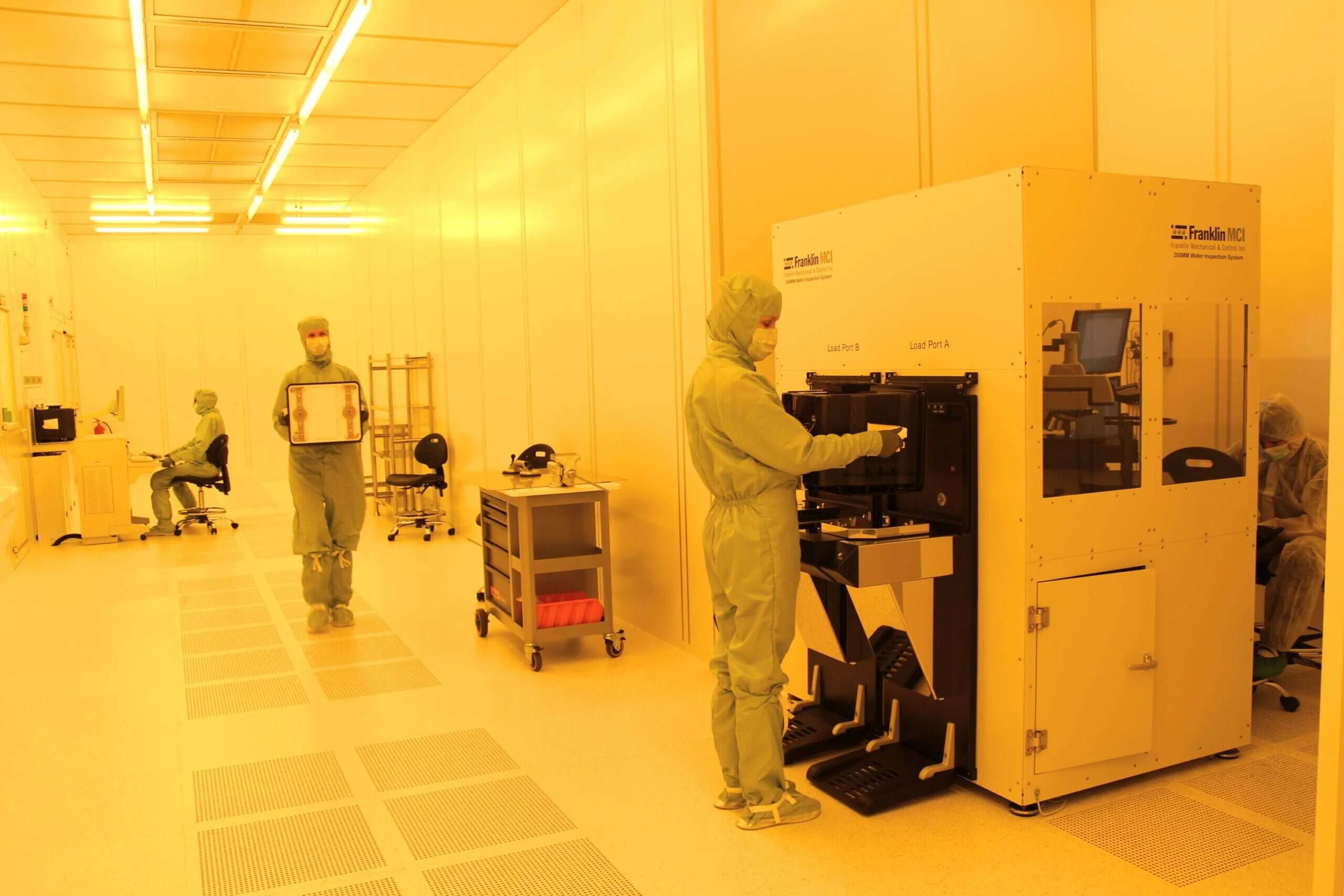
Furthermore, leading assembly and test facilities in Arizona and Japan report that automated optical inspection (AOI) rejection rates on high-bandwidth memory (HBM3e) integration have dropped below 0.15%, signaling that the thermal warpage challenges that delayed initial engineering samples during the summer have been definitively resolved. This clears the runway for large-scale enterprise deliveries across North American and European cloud centers.
Looking Ahead: The Week in Frontier Intelligence
As the trading week begins, technology executives and researchers face a rapidly evolving landscape. The imminent release of Mistral Large 4 will test enterprise appetite for open-weight self-hosting versus managed frontier APIs. Simultaneously, the implementation of the G7 Tokyo Declaration will initiate a new era of formal international safety audits, while autonomous systems like IndiaAI Cyber-Guard and AutoPR demonstrate the tangible, transformative power of AI deployed in mission-critical production environments.
Abata Tech will continue to monitor these developments around the clock, delivering authoritative, operator-grade analysis at the intersection of artificial intelligence, sovereign computing, and global enterprise strategy.