
Full-Stack Sovereign AI: How BHASHINI and DPDP Frameworks Anchor National Data Autonomy
Examining the global blueprint for full-stack AI sovereignty: combining indigenous multilingual models like BHASHINI with strict Digital Personal Data Protection (DPDP) cross-border safeguards.
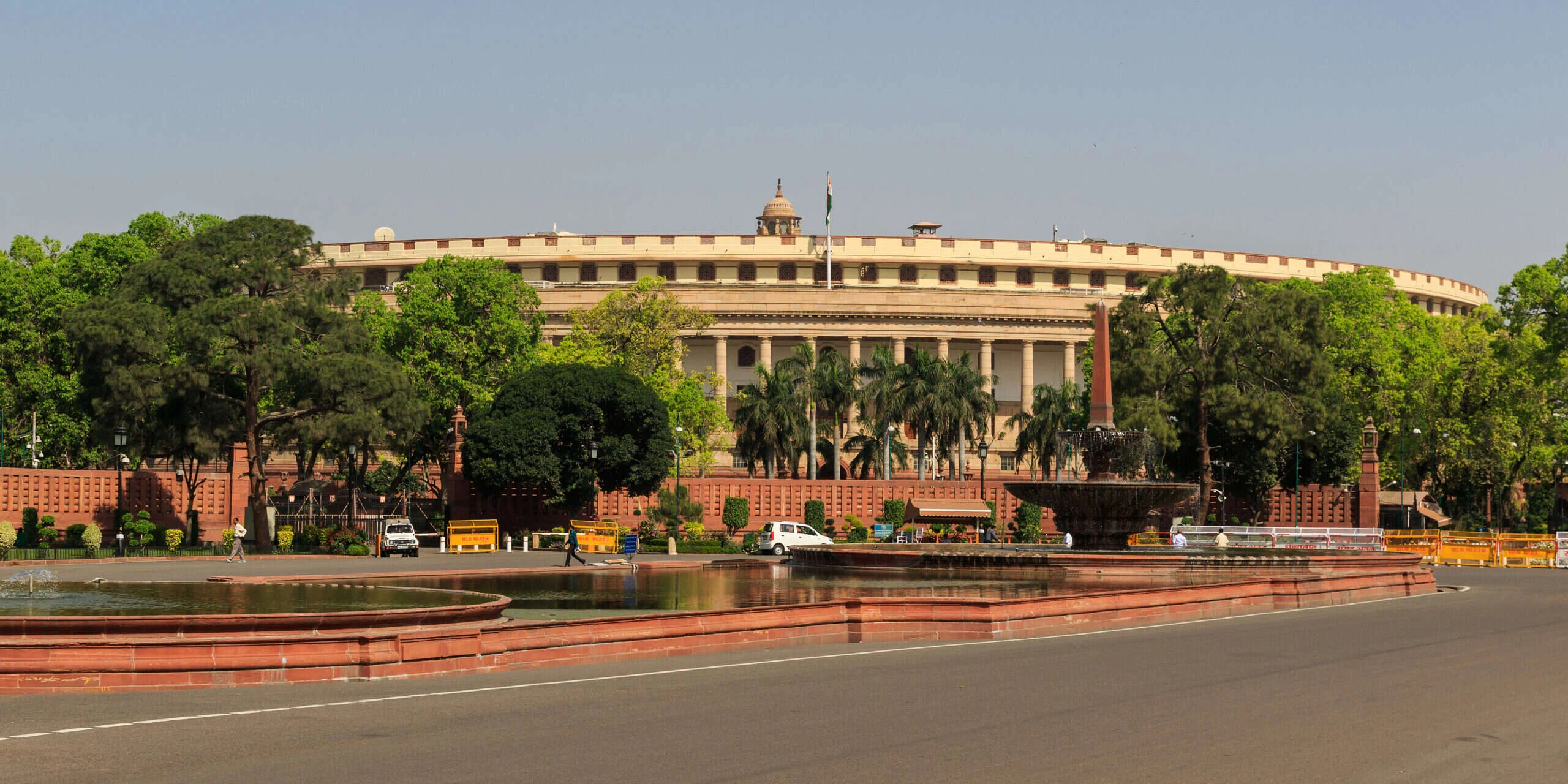
Post-IMC 2026 Mandate: MeitY Articulates the Five-Layer Full-Stack Sovereign AI Doctrine
In policy and architectural briefings following the conclusion of the 10th India Mobile Congress, officials from India’s Ministry of Electronics and Information Technology (MeitY) laid out the nation’s comprehensive blueprint for Full-Stack Strategic Autonomy in Artificial Intelligence.
Rather than defining “AI sovereignty” narrowly as fine-tuning a foreign open-source model on local text, India’s architectural doctrine insists on domestic control across all five interdependent layers of the intelligence stack: (1) Green Baseload Energy, (2) Indigenous Silicon & Photonics, (3) Domestic Tier-4 GPU Datacenters, (4) Digital Public Infrastructure (DPI) Data Commons, and (5) Multilingual Sovereign Models led by BHASHINI and BharatGen—all governed under the statutory guardrails of the Digital Personal Data Protection (DPDP) Act.
BHASHINI at Planetary Scale: Voice-First Digital Public Infrastructure Across 22 Languages
The crown jewel of India’s application-layer sovereignty is BHASHINI (BHASHa INterface for India), the National Language Translation Mission operating under the Digital India Corporation. For over 900 million Indian citizens whose primary language is not English, keyboard-driven English chatbots are functionally inaccessible.
BHASHINI solves linguistic exclusion by operating as an open, federated voice-and-translation DPI layer:
- Real-Time Multilingual ASR, NMT, and TTS Pipelines: Supporting all 22 scheduled constitutional languages and over 1,600 regional dialect variations, BHASHINI processes tens of millions of daily voice queries across agricultural mandi price lookups, railway ticketing, rural tele-medicine, and judicial e-Courts transcription.
- Conversational UPI (‘Hello! UPI’) Voice Payments: Integrated directly with the National Payments Corporation of India (NPCI), rural citizens without literacy in Latin script can execute peer-to-peer and merchant bank transfers purely by speaking in Bhojpuri, Marathi, Odia, or Tamil over basic feature phones and smartphones.
- Crowdsourced ‘Bhasha Daan’ Acoustic Corpora: Because Western web scrapes contain less than 0.1% representation of Indian regional dialects, BHASHINI mobilized millions of citizen voice donations to build sovereign acoustic datasets owned permanently by the public commons.
The Five-Layer Sovereign AI Architecture Matrix: Mitigating Foreign Jurisdiction & Telemetry Risks
Why has MeitY emphasized minimizing reliance on external proprietary APIs? When a domestic bank, hospital, or government ministry routes citizen queries through a foreign-hosted closed API, it exposes the nation to three structural risks: unilateral API price hikes, extraterritorial foreign subpoenas (such as the US CLOUD Act), and subtle cultural/alignment biases baked into foreign model weights. The table below maps India’s five-layer mitigation architecture:
| Sovereign Stack Layer | External Vulnerability / Risk | Indigenous Indian Counterpart (Oct 2026) | Statutory / Policy Anchor |
|---|---|---|---|
| Layer 5: Foundation Models & Voice | Foreign tokenizer tax (4x cost) & English bias | BHASHINI, BharatGen, Sarvam AI, Krutrim | IndiaAI Innovation Centre Grants |
| Layer 4: Data & Privacy Governance | Unconsented scraping & cross-border data leakage | AIKosh Datasets Platform & DPDP Consent Managers | DPDP Act 2023 & Techno-Legal Rules |
| Layer 3: Compute & Cloud Fabric | Foreign cloud region suspension or spot shortages | 18,693 empaneled GPUs; 1.6GW domestic datacenters | IndiaAI Compute Pillar & RBI Localization |
| Layer 2: Silicon & Interconnects | Export-control embargoes on advanced packaging | C-DAC AUM/VEGA, IIT-M Silicon Photonics, Semicon 2.0 | ₹76,000 Cr Semicon India & DLI Scheme |
| Layer 1: Connectivity & Energy | Proprietary RAN lock-in & fossil grid volatility | C-DOT/Tejas 5G-Advanced, Bharat 6G, RTC Green PPAs | National Green Hydrogen & TTDF Mission |
Enforcing the DPDP Act 2023: Fiduciary Obligations and Cross-Border AI Model Training Restrictions
A critical legal pillar highlighted by MeitY officials this week is the enforcement interplay between artificial intelligence and the Digital Personal Data Protection (DPDP) Act, 2023. Under the Act, any enterprise collecting citizen telemetry acts as a Significant Data Fiduciary subject to penalties up to ₹250 crore per breach for unauthorized processing.
Specifically, training or fine-tuning external foundation models on Indian citizens’ personal financial, biometric, or health records without explicit, revocable, itemized consent managed through a registered DPDP Consent Manager is strictly prohibited—driving multinational corporations to deploy local open-weight models inside Indian sovereign cloud regions rather than exporting raw telemetry overseas.
Exporting the DPI + Sovereign AI Blueprint to the Global South
Following bilateral agreements signed during the G20 follow-up and IMC 2026 ministerial tracks, over 18 nations across ASEAN, Africa, and Latin America have signed memoranda of understanding to adopt India’s open-source DPI + BHASHINI reference architecture—proving that emerging economies do not need to surrender their linguistic heritage or data autonomy to participate in the AI revolution.
Strategic Guidance for Multinational Enterprises Operating in India
Global enterprises serving the Indian market should immediately align their AI architectures with DPDP localization mandates, integrate BHASHINI voice APIs for vernacular customer reach, and host inference workloads within empaneled domestic Indian cloud regions.
Architectural Blueprint: Integrating BHASHINI Multilingual DPI and DPDP Consent Artifacts into Sovereign Enterprise Workflows
For government ministries, public-sector banks, healthcare networks, and multinational enterprises implementing MeitY’s Full-Stack Sovereign AI Doctrine in October 2026, the practical engineering work centers on uniting BHASHINI’s 22-language voice-and-translation pipelines with Digital Personal Data Protection (DPDP) Act cryptographic consent enforcement.
Unlike Western markets where digital onboarding assumes high English reading proficiency and credit-card penetration, serving 1.4 billion Indian citizens requires voice-first, vernacular-native interfaces that operate reliably over low-bandwidth rural mobile connections while strictly preventing cross-border data exfiltration:
- ULCA (Universal Language Contribution APIs) & Edge ASR Caching: Enterprise applications integrate with BHASHINI’s open ULCA microservices gateway to chain Automatic Speech Recognition (ASR), Neural Machine Translation (NMT), and Text-to-Speech (TTS). By deploying quantized Indic conformer ASR models at regional telecom edge pops, rural citizens experience sub-400ms voice turnaround in Maithili, Dogri, Santali, Tamil, or Hindi.
- DEPA-Compliant DPDP Consent Envelopes: Before any citizen voice transcript, land record, or clinical symptom log is ingested by a domain LLM (such as BharatGen or Sarvam-2B/70B), the application gateway verifies a signed JSON Consent Artifact issued by a registered DPDP Consent Manager—specifying exact purpose limitation, retention TTL, and zero foreign-server transfer rules.
- Eliminating the Foreign Tokenizer Penalty: Standard English-centric byte-pair tokenizers fragment Indic scripts (Devanagari, Tamil, Telugu, Bengali) into 3 to 5 tokens per syllable, inflating inference latency and compute cost by 400%. Sovereign Indic models trained under the IndiaAI Mission use balanced morphological tokenizers that compress Indic text to 1.1 tokens per word—delivering 4x faster throughput on domestic GPU clusters.
This end-to-end integration of domestic energy, silicon, cloud datacenters, DPDP data governance, and BHASHINI linguistic models establishes India’s full-stack AI architecture as the global benchmark for inclusive digital sovereignty.
Implementation Checklist: Building Full-Stack Sovereign AI & BHASHINI Workflows
CIOs across Indian public-sector enterprises, regulated financial institutions, healthcare networks, and global tech companies serving Indian citizens should implement a four-point sovereign architecture checklist:
- Embed BHASHINI ULCA Voice Pipelines Across All Citizen Touchpoints: Replace English-only web forms and DTMF phone trees with conversational BHASHINI ASR/TTS interfaces supporting all 22 constitutional languages—enabling seamless voice-driven service delivery and ‘Hello! UPI’ transactions.
- Enforce DPDP Act Consent Manager Verification Prior to Model Ingestion: Configure enterprise data gateways so no customer transcript or personal record enters a vector store or fine-tuning pipeline without a cryptographically validated DEPA consent artifact and domestic data-residency lock.
- Host Sovereign Indic Checkpoints on Empaneled Domestic GPU Clusters: Deploy indigenous models (BharatGen, Sarvam AI) with balanced Indic tokenizers inside Tier-4 Indian datacenters to eliminate 4x foreign tokenizer surcharges and cross-border CLOUD Act exposure.
By building across all five layers of India’s sovereign AI stack, organizations deliver inclusive, legally compliant, and high-performance intelligence to 1.4 billion citizens.
Cryptographic Consent Artifact Verification & Zero-Retention Indic Inference
Under the DPDP Act 2023 technical architecture anchored by MeitY, every citizen voice or document query routed through BHASHINI’s 22-language ULCA pipelines carries a W3C Verifiable Credential consent artifact signed by an empaneled Consent Manager. Sovereign inference nodes verify the purpose code and expiration timestamp in hardware before executing ASR and translation kernels, automatically purging ephemeral audio buffers and KV-cache tensors from GPU High-Bandwidth Memory within 10 milliseconds of response serialization.