
India’s 10,000+ GPU Sovereign Compute Cluster: Yotta, E2E Networks & C-DAC Rollout
Inside the physical execution of the IndiaAI Mission: analyzing the deployment of 10,000+ high-performance GPUs across Yotta Shakti Cloud, E2E Networks, and C-DAC, alongside compute subsidization models for Indian startups and academic researchers.
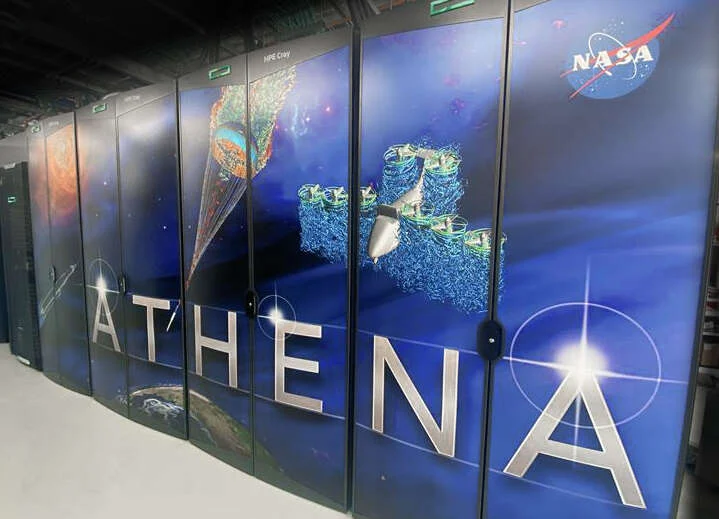
Photo: Wikimedia Commons / Creative Commons
From Policy Mandate to Physical Silicon
When the Government of India formally sanctioned the ₹10,372 crore (US$1.25 billion) IndiaAI Mission, skeptics across the global technology landscape questioned whether public funding could effectively build competitive compute infrastructure amid fierce global silicon rationing. For decades, Indian software superiority was defined by service layer execution and distributed systems integration, while foundational compute hardware remained concentrated within American hyperscalers and East Asian fabrication hubs.
This week, that paradigm shifts from policy projection to physical reality. India’s sovereign compute rollout has officially surpassed the critical milestone of 10,000 operational enterprise-grade GPUs deployed across certified sovereign datacenter facilities in Navi Mumbai, Greater Noida, and Pune. Anchored by private-public partnerships between the Ministry of Electronics and Information Technology (MeitY), Yotta Data Services, E2E Networks, and the Centre for Development of Advanced Computing (C-DAC), the initiative establishes India’s sovereign computational independence.
The Compute Architecture: Dissecting the Sovereign Triad
Rather than consolidating all computational hardware within a single monolithic state facility, the IndiaAI Mission structured its national compute grid across three distinct, highly complementary operational tiers:
1. Yotta Shakti Cloud (Navi Mumbai & Greater Noida)
Yotta Data Services represents the hyper-density foundation model training backbone of the national mission:
- Silicon Footprint: Operating out of the NM1 datacenter facility in Navi Mumbai and the D1 campus in Greater Noida, Yotta has brought online expansive clusters of NVIDIA H100 and H200 Tensor Core GPUs, interconnected via NVIDIA Quantum-2 InfiniBand networking (delivering 3.2 Tbps bidirectional node bandwidth).
- Workload Target: Sovereign Indic foundation model pre-training, large-scale multimodal token synthesis, and high-throughput enterprise batch inference.
- Power & Cooling Efficiency: Engineered to achieve a Power Usage Effectiveness (PUE) below 1.4, utilizing advanced liquid-to-air cooling manifolds capable of sustaining thermal dissipation for 40kW+ server racks under intense sustained matrix arithmetic loads.
2. E2E Networks Cloud (TIR & Accelerated Inference Hubs)
As India’s homegrown accelerated cloud computing provider, E2E Networks serves as the rapid deployment platform for mid-market enterprises and agile AI startups:
- Elastic Infrastructure: Offering instantaneous containerized GPU provisioning through its proprietary TIR platform, E2E integrates diverse silicon configurations (including NVIDIA L40S, A100, and upcoming Blackwell instances) optimized for parameter-efficient fine-tuning (PEFT) and low-latency API serving.
- Domestic Cost Economics: By eliminating foreign cloud data egress fees and foreign currency exchange volatility, E2E delivers raw compute pricing up to 45% lower than traditional US hyperscalers operating in-region.
3. C-DAC & National Supercomputing Mission (NSM Integration)
The Centre for Development of Advanced Computing serves as the research and scientific anchor of the sovereign infrastructure:
- PARAM Compute Grid: Integrating the computational capacity of PARAM supercomputers (including PARAM Shivay, PARAM Siddhi-AI, and PARAM Rudra) into the unified IndiaAI compute portal.
- Academic Subsidization: Providing fully subsidized compute grants for researchers across the Indian Institutes of Technology (IITs), Indian Institute of Science (IISc), and national research laboratories working on climate modeling, molecular biology, and Indic natural language processing.
Compute Economics: Democratizing Access for Indian Startups
Deploying high-performance silicon is only half the battle; ensuring accessible pricing for early-stage engineering teams is the true determinant of national innovation. Under traditional commercial contracts, renting an 8x H100 GPU node costs upwards of $24 to $30 per hour—a burn rate that rapidly depletes early venture capital rounds.
The IndiaAI Mission has instituted a landmark Tiered Compute Subsidization Mechanism managed through the unified IndiaAI portal:
| Applicant Tier | Compute Allocation | Effective Subsidy | Target Deliverables |
|---|---|---|---|
| Academic & Research Labs (IITs / IISc) | Up to 256 GPU node-months | 100% Grant-funded | Peer-reviewed research, open datasets, Indic SLMs |
| Early-Stage AI Startups (Seed / Pre-Series A) | Up to 64 GPU node-months | 70% Government Subsidy | Functional MVP, domestic enterprise validation |
| Growth-Stage Indian AI Ventures | Up to 512 GPU node-months | 50% Price Subsidization | Commercial production deployment, sovereign hosting |
| Enterprise & Global Capability Centers (GCCs) | Uncapped Commercial Reserved | 0% (Standard Sovereign Tariff) | Sovereign compliance, private enterprise pipelines |
Strategic Implications: Escaping Transatlantic Compute Colonialism
The operationalization of India’s 10,000+ GPU cluster transcends technology metrics—it carries profound geopolitical significance. In an era where technological sovereignty is increasingly wielded as a foreign policy lever through export restrictions and cross-border data treaties, relying entirely on foreign cloud providers introduces existential operational fragility.
By anchoring compute infrastructure within domestic territory, Indian enterprises guarantee:
- Uncompromising Data Residency: Sovereign financial, healthcare, and citizen datasets never exit Indian legal jurisdiction during training or inference cycles, meeting strict standards under the Digital Personal Data Protection (DPDP) Act.
- Immunity from Foreign Export Sanctions: Domestic research programs in defense, space exploration, and agricultural logistics operate with guaranteed runtime availability independent of shifting diplomatic alliances.
- Economic Multiplier Effect: Every rupee allocated to sovereign compute circulates within the domestic technology ecosystem, accelerating domestic datacenter engineering, power grid modernizations, and local high-tech employment.
The Road Ahead: Scaling to 30,000 GPUs by 2027
While achieving 10,000 operational enterprise GPUs represents a monumental operational milestone, leadership at MeitY has already initiated Phase 2 expansion plans. The subsequent target aims to scale India’s national sovereign compute envelope to over 30,000 accelerators by early 2027, incorporating domestic optical networking interconnects and indigenous microprocessor architectures developed under the DIR-V (Digital India RISC-V) program. India is no longer merely participating in the artificial intelligence revolution—it is constructing the physical bedrock upon which sovereign intelligence will thrive.
The Indigenous Hardware Horizon: DIR-V & C-DAC Supercomputing Fabrics
While the initial phase of the IndiaAI Mission relies on imported NVIDIA accelerator hardware (H100 and H200 clusters), long-term sovereign independence necessitates developing domestic silicon fabrication and high-bandwidth interconnect architectures. The Government of India’s Digital India RISC-V (DIR-V) initiative represents the foundational research effort driving this technological transition.
Spearheaded by research teams at IIT Madras (the Shakti processor program) and C-DAC (the Vega processor initiative), India’s semiconductor roadmap is actively developing indigenous accelerator designs:
- Custom RISC-V Vector Extensions: Developing indigenous 64-bit multi-core processors augmented with custom vector arithmetic units optimized for tensor dot products and low-precision matrix operations (FP8 and INT4 quantization).
- Indigenous Interconnect Protocols: High-density AI training clusters are bottlenecked by optical communication fabrics. C-DAC engineering teams in Pune are validating indigenous high-bandwidth interconnects designed to link thousands of heterogeneous processing nodes with ultra-low latency, mitigating reliance on proprietary foreign networking fabrics.
- Domestic Advanced Packaging Initiatives: In partnership with the Tata Electronics semiconductor assembly and test (OSAT) facility in Morigaon, Assam, and Micron’s packaging hub in Sanand, Gujarat, India is cultivating domestic capabilities in 2.5D and 3D chiplet integration, laying the physical groundwork for domestically packaged AI accelerators by the late 2020s.
Operational Checklist: Securing Subsidized Compute under the IndiaAI Mission
For Indian enterprise architects, startup founders, and academic department heads seeking to leverage the IndiaAI compute allocation portal, navigating the application pipeline requires rigorous technical preparation:
- Benchmark Verification: Applicants must demonstrate baseline parameter-efficiency profiles on local hardware before requesting multi-node H100 clusters. Proposals incorporating speculative decoding, FlashAttention-3, and LoRA/DoRA fine-tuning receive prioritized scoring.
- Sovereign Data Governance Plan: Provide comprehensive architectural documentation certifying that training datasets comply with the Digital Personal Data Protection (DPDP) Act, including consent lineage, anonymization pipelines, and zero-egress guarantees.
- Open Science Deliverables: Projects receiving 70% or 100% public compute grants must commit to releasing model weights, evaluation harnesses, and clean training recipes to the Indian public research repository under permissive open-source licenses.
Primary Citations & Technical References
- Ministry of Electronics and Information Technology (MeitY). (October 2026). IndiaAI Mission: National Compute Infrastructure Progress & Allocation Guidelines. Government of India, New Delhi.
- Yotta Data Services. (2026). Shakti Cloud Architecture: High-Density AI Supercomputing and Quantum-2 InfiniBand Fabrics. Yotta Infrastructure Whitepaper.
- Centre for Development of Advanced Computing (C-DAC). (2026). National Supercomputing Mission (NSM): Integration of AI Clusters for National Research. Pune, India.
- E2E Networks. (2026). TIR Accelerated Compute Platform: Benchmarking Enterprise Model Training on Sovereign Cloud. Technical Report.
Architecting Sovereign AI Solutions or Private Datacenter Workloads?
ABATA AI engineers custom enterprise model architectures, sovereign cloud deployments, and high-throughput inference systems. Book an engineering review with our architecture team.