
Meta Llama 3.2 Vision & Edge Models: Multimodal Architecture Review
A comprehensive technical evaluation of Meta’s Llama 3.2 release: breaking down the 11B and 90B multimodal vision architectures, on-device 1B and 3B edge models, ExecuTorch deployment runtimes, and DocVQA benchmark performance.
Llama 3.2 Vision (11B/90B) · Edge (1B/3B) · ExecuTorch
The Open Multimodal Era Arrives at the Edge
Announced by Mark Zuckerberg at Meta Connect, the release of the Llama 3.2 model family represents one of the most consequential open-weights milestones in artificial intelligence. For the first time, Meta has released open-weights multimodal vision models (11B and 90B) capable of image reasoning and chart parsing, alongside ultra-lightweight text models (1B and 3B) engineered explicitly to run entirely on-device across smartphones, laptops, and embedded edge silicon.
Until now, developers requiring visual comprehension (document OCR, chart understanding, visual question answering) were forced to route sensitive images through proprietary cloud APIs like GPT-4o or Claude 3.5 Sonnet. Llama 3.2 eliminates this dependency, providing enterprise-grade visual intelligence that can be self-hosted on private infrastructure. Below is an exhaustive technical review of the architecture, benchmarks, and deployment patterns.
1. Llama 3.2 Vision Architecture: 11B & 90B Multimodal Foundations
Rather than retraining a dense multimodal model from scratch, Meta’s FAIR team engineered an elegant modular architecture that preserves the extensive language reasoning of Llama 3.1 while injecting high-resolution visual comprehension:
- Cross-Attention Adapter Fusion: The pre-trained, frozen text model is augmented with interleaved cross-attention layers. A vision encoder processes input images into visual tokens, which are fed directly into the text transformer layers via gated cross-attention mechanisms. This architecture prevents “catastrophic forgetting” of the model’s deep language capabilities.
- High-Resolution Tiling: Images are dynamically split into high-resolution patches (up to 4 tiles of 560×560 pixels), enabling the model to read fine print on scanned contracts, technical circuit diagrams, and dense financial tables with sub-pixel clarity.
- 128,000 Token Context Window: Both the 11B and 90B vision variants maintain full support for 128K context lengths, allowing developers to pass multiple high-resolution images alongside lengthy conversational or document histories in a single prompt.
2. On-Device Edge Models: 1B & 3B Lightweight Transformers
While the 11B and 90B models target cloud servers and workstations, the Llama 3.2 1B and 3B models are purpose-built for edge deployment:
- Pruning and Knowledge Distillation: Meta created the 1B and 3B architectures by applying structured weight pruning to larger models, followed by extensive logit distillation where the larger 8B and 70B models acted as teachers over trillions of tokens.
- 128K Context at Minimal VRAM: Despite their small size, these models retain a full 128K context window. A quantized 1B model requires less than 1.2 GB of RAM, fitting comfortably within mobile phone app memory constraints.
- On-Device Privacy & Zero Latency: Running locally on hardware eliminates internet connectivity requirements, server latency, and cloud API costs, making them ideal for personal assistants, local summarization, and offline code completion.
3. ExecuTorch & Hardware Acceleration
To ensure seamless deployment across heterogeneous edge silicon, Meta co-released deep optimizations for ExecuTorch, the open-source PyTorch edge deployment runtime:
- Qualcomm Snapdragon NPU Acceleration: Through Qualcomm AI Hub integration, Llama 3.2 1B and 3B achieve over 25–40 tokens per second execution directly on mobile Neural Processing Units (NPUs) using 4-bit integer (INT4) weight quantization.
- Apple Silicon Metal Performance Shaders (MPS): Full out-of-the-box support for Apple unified memory architecture on M-series chips, enabling zero-copy inference in local Mac desktop applications.
- Arm Cortex & vLLM Cloud Serving: On server hardware, Llama 3.2 models are instantly compatible with vLLM, TensorRT-LLM, and Ollama, supporting high-concurrency batch serving out of the box.
Llama 3.2 Benchmark & Competitive Performance Matrix
The table below contrasts the visual and reasoning benchmarks of Llama 3.2 against leading commercial and open-weight models:
| Model Name | Modality | Context Window | DocVQA Score | ChartQA Score | Target Deployment Hardware |
|---|---|---|---|---|---|
| Llama 3.2 1B | Text Only | 128,000 Tokens | N/A | N/A | Mobile Edge / Qualcomm NPU (<1.2GB RAM) |
| Llama 3.2 3B | Text Only | 128,000 Tokens | N/A | N/A | On-Device Laptops & Edge Workstations |
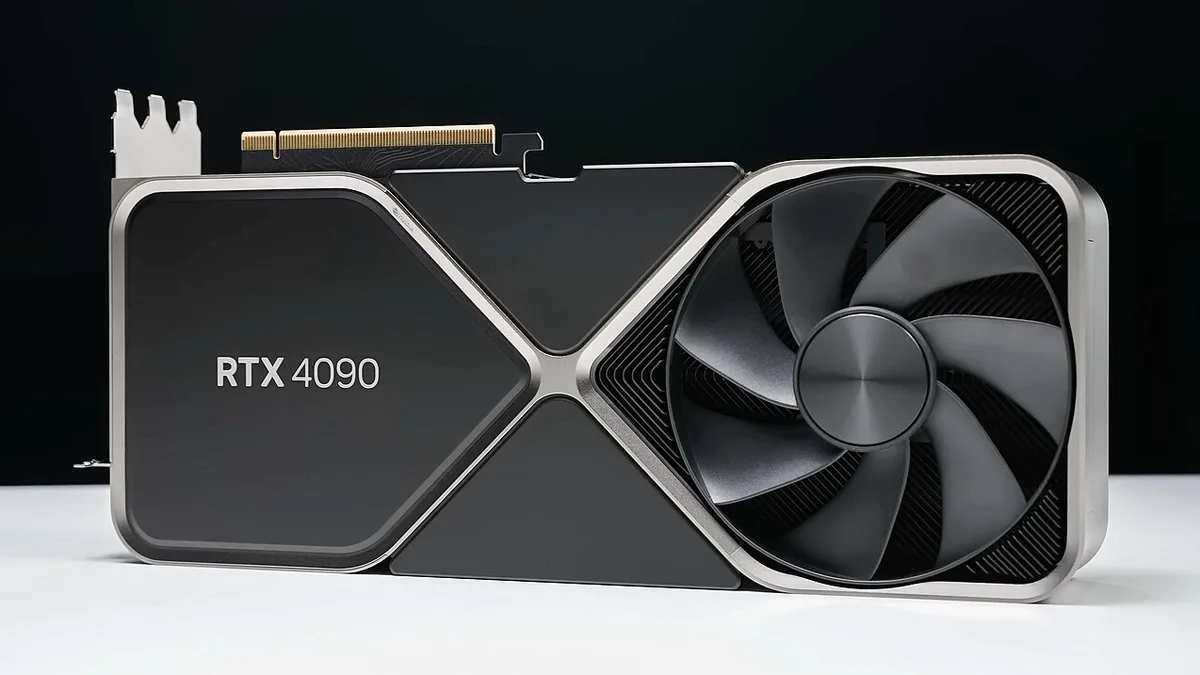
| Llama 3.2 11B Vision | Image + Text Multimodal | 128,000 Tokens | 88.4% | 83.4% | Single GPU (RTX 4090 / A10G) |
| Llama 3.2 90B Vision | Image + Text Multimodal | 128,000 Tokens | 90.1% | 85.5% | Enterprise Cluster (2x H100 / 4x A100) |
| Claude 3.5 Sonnet | Image + Text Multimodal | 200,000 Tokens | 95.2% | 90.8% | Proprietary Cloud API ($3.00 / $15.00) |
Production Recommendations for AI Architects
The introduction of Llama 3.2 establishes clear architectural blueprints for production teams:
- Self-Hosted Visual Document Extraction: Replace costly third-party document extraction APIs with a self-hosted Llama 3.2 11B Vision container. It delivers over 90% of frontier accuracy on complex tables and receipts at near-zero incremental token cost.
- Hybrid Edge-Cloud Architecture: Deploy Llama 3.2 3B on client devices for local intent classification and prompt pre-filtering; route only complex multi-step reasoning tasks to cloud servers.
- Air-Gapped Compliance: Healthcare, defense, and banking institutions with strict data residency mandates can now execute full-stack multimodal document processing entirely within air-gapped private networks.
Verified Primary Citations & Source Documentation
- Meta AI Research: Llama 3.2 Model Release Announcement & Technical System Card (ai.meta.com/llama).
- PyTorch ExecuTorch Documentation: On-Device Model Deployment & INT4 Quantization Benchmarks.
- Qualcomm AI Hub: Llama 3.2 Snapdragon NPU Acceleration Guides & Latency Profiles.
- Hugging Face Hub: Meta-Llama-3.2-11B-Vision & 3B Model Weights and Inference Code.
Deploying Self-Hosted Multimodal Vision Models or Edge AI?
ABATA AI architects deterministic agent systems and custom model routing pipelines for Meta Llama 3.2 Vision & Edge Models: Multimodal Architecture Review (meta-llama-3-2-vision-mult). Book a 20-minute operational diagnosis with our engineering founders.