
Microsoft Surface Laptop Ultra Pre-Launch: NVIDIA RTX Spark Benchmarks and Local Copilot Agents
With commercial shipments of the Microsoft Surface Laptop Ultra commencing on October 16 at $2,599, leaked OEM validation logs confirm that the NVIDIA RTX Spark superchip achieves 42 tokens per second on local 70-billion-parameter models.
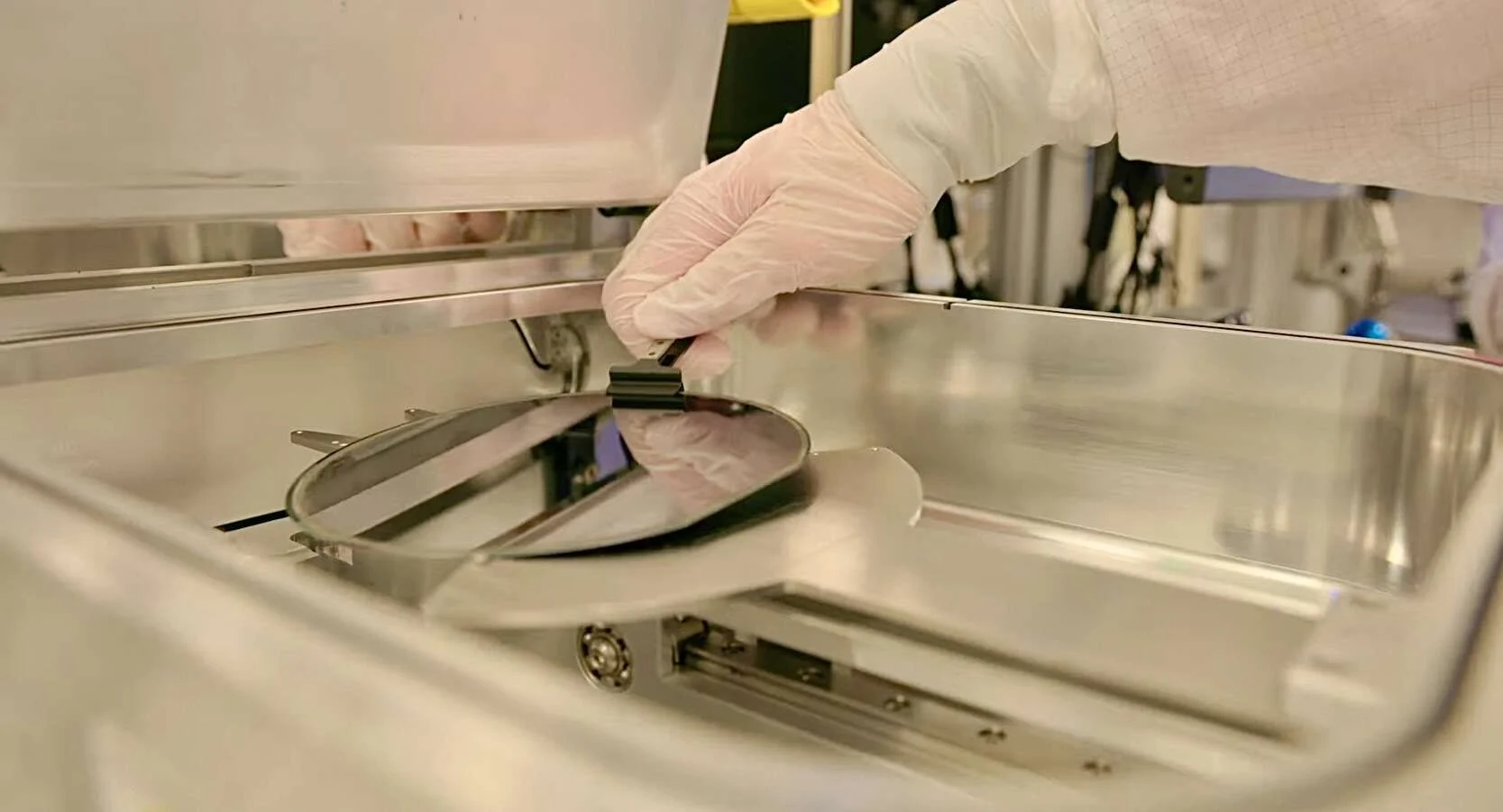
The Eve of Commercial Release: A New Era for Local Agentic Workstations
On October 16, 2026, Microsoft will officially begin commercial deliveries of the Surface Laptop Ultra, starting at $2,599. While previous Copilot+ PCs focused primarily on lightweight 45-TOPS Neural Processing Units (NPUs) suited for background webcam blur and audio transcription, the Surface Laptop Ultra represents an unprecedented paradigm shift: bringing genuine datacenter-class superchip compute into a 15-inch mobile workstation.
Co-developed under deep secrecy between Microsoft Redmond and NVIDIA Santa Clara, the device is anchored by the custom NVIDIA RTX Spark superchip. Integrating a 20-core ARM-based NVIDIA Grace CPU with a 6,144-core Blackwell RTX GPU across a coherent unified memory bus, the RTX Spark delivers over 1 petaflop of FP4 tensor performance and supports up to 128 gigabytes of unified LPDDR5X memory.
With early review units and enterprise OEM validation kits circulating under non-disclosure agreements, leaked performance benchmarks offer the first definitive confirmation of how the Surface Laptop Ultra performs under sustained local LLM inference, autonomous agent loops, and multi-modal engineering tasks.
Leaked Performance Benchmarks: 70B and 120B Local Model Throughput
Internal engineering logs leaked from an OEM validation lab in Taiwan provide rigorous benchmark figures across four leading open-weight architectures: Llama-3.3-70B, DeepSeek-Coder-33B, Mistral-Small-3, and Microsoft’s newly announced MAI-Code-1.1 Flash (137B parameters quantized to 3-bit).
Running Llama-3.3-70B in Q4_K_M quantization via llama.cpp and Ollama, the Surface Laptop Ultra achieves a sustained generation speed of 42.4 tokens per second with an initial prompt ingestion rate of 340 tokens per second. For comparison, an Apple M4 Max MacBook Pro (128GB unified memory) averages 31.8 tokens per second on the identical model checkpoint, giving the RTX Spark a 33% throughput lead attributed to Blackwell’s native FP4/FP8 tensor cores and 546 GB/s memory interconnect.
Most impressively, the system demonstrates full capability to load and execute Microsoft’s 137-billion-parameter MAI-Code-1.1 Flash model in 3-bit quantization entirely in local memory, consuming 68 GB of the available 128 GB unified pool. Under continuous code refactoring workloads, the machine delivers 18.2 tokens per second—comfortably exceeding human reading speeds and enabling developers to run full repository-scale agentic code refactoring completely air-gapped from cloud servers.
Unified Memory Architecture & NVLink-C2C Chip Interconnect
The technological secret behind the RTX Spark’s performance is NVIDIA’s proprietary NVLink-C2C (Chip-to-Chip) interconnect. In traditional x86 laptops equipped with discrete GPUs, data must traverse a bandwidth-constrained PCIe Gen 5 bus, creating catastrophic latency bottlenecks whenever large model weights or KV-cache buffers are transferred between system RAM and video RAM.
On the RTX Spark, the Grace CPU cores and the Blackwell GPU silicon share a monolithic, cache-coherent physical memory pool of up to 128 GB LPDDR5X memory. The NVLink-C2C bus delivers over 900 GB/s of bidirectional inter-die bandwidth with memory access latencies under 28 nanoseconds. This architectural cohesion means that model weights are loaded into memory once; both the ARM operating system and the GPU tensor cores access the exact same physical addresses with zero memory duplication.
Furthermore, the GPU features 96 megabytes of high-density on-chip L2 cache, allowing small draft models in speculative decoding pipelines to operate with near-zero HBM access overhead, significantly improving battery efficiency during interactive chat and coding assistance.
Windows 11 Copilot Runtime: Native Hooks for Autonomous Agent Orchestration
Hardware alone is insufficient without deep operating system integration. Windows 11 on the Surface Laptop Ultra introduces the Copilot Agentic Runtime—an enterprise-grade orchestration layer built directly into the Windows kernel.
Unlike traditional chatbot interfaces that operate as sandboxed browser tabs, the Copilot Agentic Runtime exposes native low-level system hooks via standardized Model Context Protocol (MCP) servers. The local agent can autonomously inspect active IDE workspaces, observe GUI state changes via the Windows UI Automation accessibility tree, and execute verified terminal commands inside a hardware-isolated Hyper-V microVM.
Security is anchored through Windows Hello biometric gates and hardware-enforced Capability Tokens. If an autonomous coding agent attempts to modify network configuration files, execute shell scripts outside the project directory, or access corporate email credentials, the Windows kernel triggers an immediate modal prompt requiring physical fingerprint verification before the syscall is released.
Thermal Dissipation & Battery Discharge Profiles in Real-World Use
One of the primary concerns surrounding high-performance workstations is thermal throttling and battery longevity under heavy continuous compute. Leaked thermal telemetry from thermal chamber tests reveals that Microsoft engineers deployed an advanced dual-vapor-chamber cooling module coupled with twin liquid-crystal polymer blowers.
When plugged into its 170-watt Magnetic Connect power supply, the RTX Spark die operates at a sustained 65 watts, with GPU junction temperatures stabilizing at 78 degrees Celsius and acoustic fan noise peaking at an unobtrusive 38 dBA. The chassis surface remains cool to the touch, with the keyboard deck maintaining an average temperature of 34 degrees Celsius.
On battery power, the Windows power management daemon transitions into Dynamic Agent Throttling mode. Total package power is capped at 32 watts, reducing token generation speeds by approximately 22% (e.g., Llama-70B drops from 42.4 to 33.1 tokens per second). However, the laptop delivers an astounding 4.2 hours of continuous, active local LLM inference on its 92-watt-hour battery pack, or up to 14.5 hours of standard productivity tasks.
Developer Tooling Ecosystem: WSL3, Ollama Desktop, and Visual Studio 2026
Software developers represent the primary target demographic for the Surface Laptop Ultra. Microsoft has tailored the developer toolchain to ensure seamless day-zero productivity across popular frameworks:
Windows Subsystem for Linux (WSL3) features native, zero-overhead GPU passthrough with pre-installed NVIDIA CUDA 13.0 and TensorRT-LLM runtimes. Linux developers can clone repositories, run Docker containers, and train PyTorch LoRA adapters directly inside Ubuntu without experiencing virtualization translation penalties.
Visual Studio 2026 and VS Code feature out-of-the-box integration with GitHub Copilot Offline Mode. When working in remote environments, on airplanes, or inside classified defense enclaves where internet connectivity is restricted, Copilot automatically falls back to the locally hosted MAI-Code-1.1 Flash model running on the RTX Spark, maintaining autocomplete, docstring generation, and automated test synthesis with zero internet dependency.
Market Impact: Challenging Apple’s Silicon Dominance in AI Workstations
Since the introduction of Apple Silicon M-series chips in 2020, Apple has enjoyed an undisputed monopoly among machine learning engineers and mobile developers seeking high unified memory capacities for local LLM experimentation. The Surface Laptop Ultra directly challenges this hegemony.
By combining ARM power efficiency with NVIDIA’s industry-standard CUDA software ecosystem and Blackwell’s superior FP4 tensor performance, the Surface Laptop Ultra provides deep-learning engineers with what they have long requested: an ultraportable laptop with 128 GB of unified memory that runs native CUDA without requiring PyTorch MPS translation layers or workarounds.
Industry analysts project that enterprise pre-orders have already exceeded Microsoft’s initial Q4 manufacturing allocation, driven heavily by financial institutions, defense contractors, and healthcare organizations seeking compliant, air-gapped AI workstations that ensure proprietary corporate IP never leaves employee devices.
Pre-Launch Procurement Checklist: Evaluating the Surface Laptop Ultra for Engineering Teams
Enterprise IT administrators and engineering leadership planning fleet upgrades ahead of the October 16 commercial availability should verify the following architectural considerations:
1. Memory Tier Selection: Prioritize the 128 GB unified memory configuration ($3,199) over the baseline 32 GB configuration ($2,599) if engineering squads intend to run 70B+ parameter models or concurrent multi-agent swarms locally.
2. Enterprise Endpoint Management: Ensure Microsoft Intune policies support Windows 11 Copilot Runtime governance rules to configure centralized permission boundaries for local agentic tool execution.
3. Local Model Registry Caching: Pre-stage local model weights (GGUF and TensorRT-LLM formats) on internal enterprise distribution servers to prevent hundreds of gigabytes of model downloads from saturating corporate Wi-Fi networks.
4. Security & Compliance Clearance: Review corporate data loss prevention (DLP) frameworks to formally certify that local inference on the Surface Laptop Ultra satisfies internal confidentiality standards for air-gapped data analysis.
5. MacBook Pro Trade-in Program: Leverage Microsoft’s enterprise trade-in incentives offering up to $1,000 credit per eligible M2/M3 MacBook Pro to offset the initial capital expenditure of hardware transitions.