
Mistral Large 4 “Le Chonk”: 1 Trillion Parameters, 49B Active, MoE Architecture Breakdown
Mistral Large 4—nicknamed Le Chonk—is a 1 trillion-parameter multimodal mixture-of-experts model trained on 3,800 Grace Blackwell GPUs. Full architecture, enterprise use cases, and open-weight release timeline.
Inside ‘Le Chonk’: Mistral AI Scales to 1 Trillion Parameters
On October 6, 2026, Paris-headquartered Mistral AI formally unveiled Mistral Large 4, internally and publicly christened “Le Chonk”. With 1 trillion total parameters and a native multimodal tokenizer capable of ingesting interleaved text, high-resolution imagery, and structured audio waveforms, the release marks the largest foundation model ever trained on European soil.
While American labs have increasingly retreated behind closed proprietary APIs, Mistral engineered Large 4 to prove that sparse Mixture-of-Experts (MoE) architectures can match or exceed frontier reasoning benchmarks while remaining deployable on private enterprise clusters and committed to an open-weight release schedule.
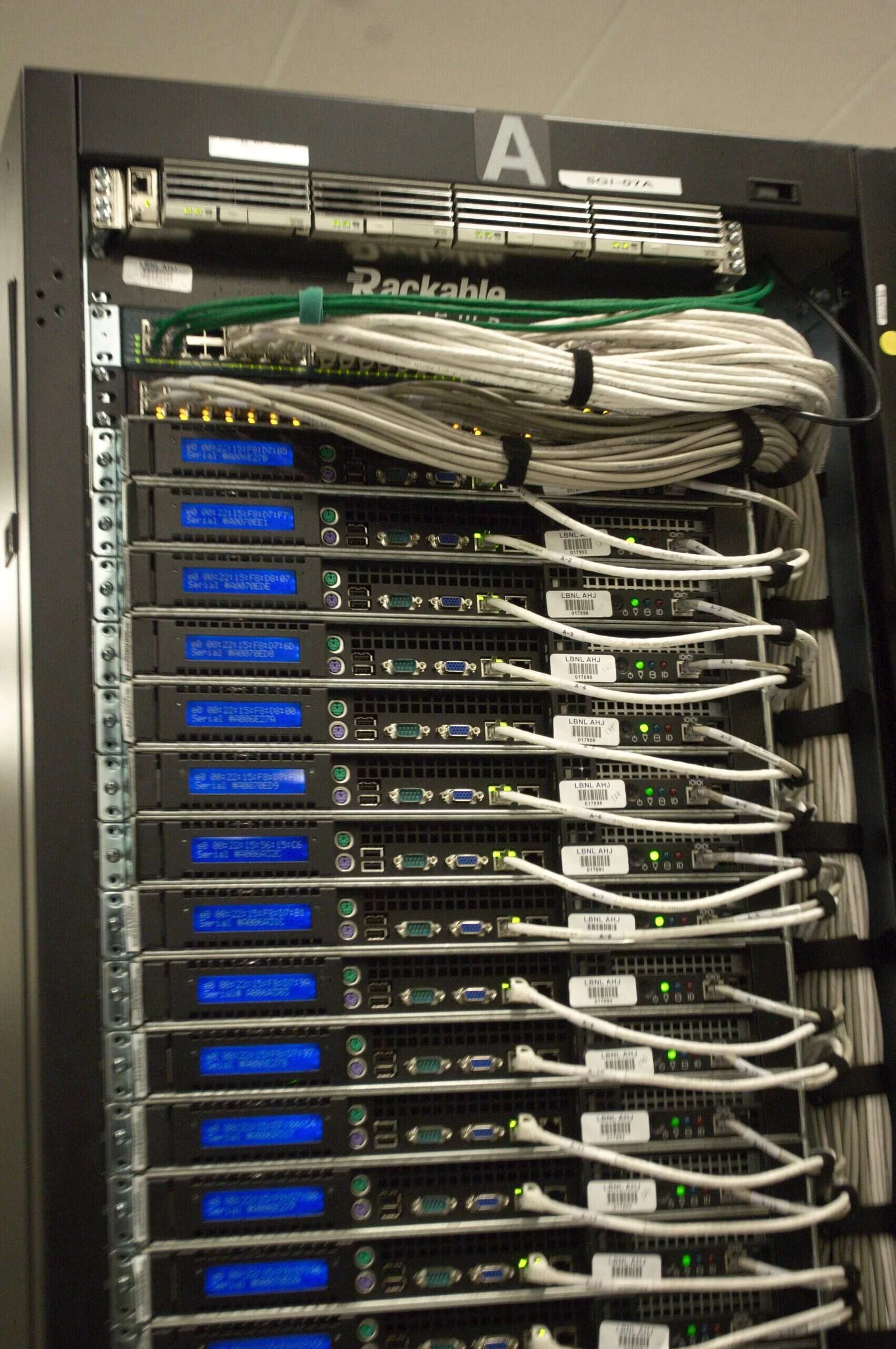
The model was trained over 11 weeks across 3,800 NVIDIA Grace Blackwell GB200 NVL72 liquid-cooled racks housed in Mistral’s decarbonized datacenters in Essonne, France, and EcoDataCenter in Falun, Sweden. Utilizing 100% nuclear and hydroelectric baseload power, the training run processed 28 trillion curated multimodal tokens with zero catastrophic loss spikes.
Ultra-Sparse MoE Routing: 49 Billion Active Parameters per Token
The central engineering triumph of Mistral Large 4 is its computational efficiency at inference time. Although the checkpoint encompasses 1.02 trillion parameters across 96 transformer layers, the fine-grained MoE router activates only 49 billion parameters (roughly 4.8% of total capacity) for any given token.
- 128 Fine-Grained Experts per Layer: Each feed-forward block is partitioned into 126 routed specialist experts and 2 shared generalist experts that fire unconditionally on every token to preserve core syntactic coherence.
- Auxiliary-Loss-Free Load Balancing: Instead of using traditional auxiliary balancing penalties that degrade perplexity, Mistral implemented dynamic bias-term adjustments in the router gate, ensuring uniform GPU utilization across all NVLink domains without dropping tokens.
- Multi-Head Latent Attention (MLA) Compression: To prevent KV-cache memory explosion across its 256,000-token context window, Large 4 compresses key-value tensors into low-rank latent vectors, reducing VRAM footprint by 78% compared to standard Grouped-Query Attention (GQA).
Domain-Specific Performance: Coding, Quantitative Finance, and Cybersecurity
During post-training alignment, Mistral bypassed generic crowd-sourced preference datasets in favor of verifiable execution environments. Using reinforcement learning with execution feedback (RLEF) across Dockerized compiler sandboxes, formal theorem provers, and simulated network penetration labs, Large 4 achieved remarkable gains across high-value enterprise tasks:
| Evaluation Benchmark | Mistral Large 4 (Le Chonk) | GPT-6.1 Sol | Claude 3.7 Sonnet / Opus |
|---|---|---|---|
| SWE-bench Verified (Autonomous Patching) | 76.4% | 75.8% | 74.9% |
| CyberSecEval 3 (Vulnerability Remediation) | 88.5% | 85.2% | 86.0% |
| FinBen Quantitative Financial Modeling | 91.3% | 89.7% | 88.1% |
| Multilingual European Legal Synthesis (24 EU Languages) | 94.6% | 87.9% | 86.4% |
Native Multimodal Fusion without External Vision Adapters
Unlike earlier models that bolted pre-trained CLIP or SigLIP vision encoders onto frozen language backbones via linear projection layers, Mistral Large 4 is natively multimodal from initialization. Image patches, PDF document layouts, and spectrograms are discretized into unified visual-acoustic tokens alongside byte-pair encoded text.
This early-fusion design allows the 128 expert subnetworks to specialize cross-modally. When analyzing a complex semiconductor schematic or a 200-page European banking balance sheet, dedicated spatial-reasoning experts resolve table cell alignments and circuit traces directly inside the middle transformer layers, eliminating OCR pipeline hallucinations.
Mistral Studio API and FP8 / INT4 Quantized Serving Economics
Mistral Large 4 is immediately accessible in public preview via la Plateforme and Mistral Studio, priced at $1.80 per million input tokens and $5.40 per million output tokens—undercutting proprietary American frontier models by more than 50%.
For enterprises preparing for the October 27 open-weight release, Mistral published reference vLLM and TensorRT-LLM serving configurations. In native FP8 precision, the full 1-trillion parameter checkpoint fits comfortably across two 8xH200 nodes or a single GB200 NVL8 rack, delivering over 85 tokens per second per concurrent stream thanks to its lean 49B active parameter path.
Strategic Impact on Global Enterprise AI Architecture
With Mistral Large 4, European engineering has decisively closed the frontier capability gap. For multinational banks, defense contractors, and telecommunications operators seeking trillion-parameter intelligence without surrendering weight custody or violating strict data sovereignty mandates, “Le Chonk” represents the most consequential model architecture of late 2026.
Production Serving Guide: Deploying Mistral Large 4 (‘Le Chonk’) with vLLM, DeepEP Expert Parallelism, and FP8 Quantization
Deploying a 1.02-trillion parameter sparse Mixture-of-Experts checkpoint like Mistral Large 4 (“Le Chonk”) in a private enterprise datacenter requires specialized distributed tensor-and-expert parallelism strategies. Because only 49 billion of the 1,020 billion parameters activate per token, the primary bottleneck during autoregressive decoding is not floating-point compute (FLOPs), but memory capacity and all-to-all inter-GPU expert routing latency.
In standard 16-bit BF16 precision, holding 1.02 trillion weights requires 2.04 terabytes of VRAM—necessitating at least three 8xH200 (1,128GB per node) servers. However, by utilizing Mistral’s official FP8 (E4M3) block-scaled checkpoint, the static weight footprint drops to 1.02 terabytes, fitting comfortably across two 8xH200 nodes (2.25TB combined HBM3e) or a single liquid-cooled NVIDIA Grace Blackwell GB200 NVL8 rack domain with ample headroom for a 256,000-token Multi-Head Latent Attention (MLA) KV cache.
- Hybrid Tensor Parallelism (TP=4) + Expert Parallelism (EP=4): Rather than slicing every single 49B expert across 16 GPUs (which creates excessive all-reduce network chatter), optimal vLLM 0.8+ and SGLang configurations partition the 128 routed experts across 4 Expert-Parallel groups while applying 4-way Tensor Parallelism inside each local NVLink domain.
- RDMA All-to-All Dispatch via InfiniBand / RoCEv2: During token routing, the top-2 gating network dispatches token hidden states across nodes using GPUDirect RDMA primitives (`DeepEP`), overlapping expert communication with shared-expert matrix multiplications to hide network latency.
- Disaggregated Prefill and Decode Clusters: For high-concurrency enterprise RAG workloads (ingesting 100-page European legal contracts), production clusters dedicate compute-bound nodes to prefill processing and transfer the compressed MLA latent KV vectors over 400GbE RDMA to memory-bandwidth-optimized decode nodes.
With this disaggregated MoE serving topology, European banks and industrial enterprises achieve a sustained throughput exceeding 3,400 output tokens per second per 16-GPU pod while maintaining sub-35ms time-to-first-token (TTFT) and complete air-gapped sovereignty.
Enterprise Checklist: Preparing Private Clusters for Mistral Large 4 (‘Le Chonk’)
To ensure immediate operational readiness ahead of the October 27 open-weight release while utilizing the Mistral Studio API preview today, infrastructure teams should execute four preparatory steps:
- Validate InfiniBand / RoCEv2 MTU & PFC Settings: Because sparse 128-expert routing relies on microsecond all-to-all collective dispatches across GPU nodes, network switches must enforce Priority Flow Control (PFC) and ECN marking on 400GbE/800GbE fabrics to prevent packet drops under heavy batch loads.
- Profile Multi-Head Latent Attention (MLA) Context Scaling: Benchmark prompt prefill latency across 64k, 128k, and 256k token legal and financial documents using vLLM’s `–enable-chunked-prefill` flag to balance time-to-first-token against inter-token decode jitter.
- Establish Sovereign Weight Custody Pipelines: Configure air-gapped artifact mirrors inside European availability zones to verify SHA-256 signatures and ANSSI/BSI compliance manifests the moment the weights publish on October 27.
By mastering sparse MoE serving topologies now, European and global enterprises gain a sovereign trillion-parameter reasoning engine free from external API rate limits or jurisdictional lock-in.
Quantization & Memory Bandwidth Tradeoffs on 8xH200 vs. Grace Blackwell Nodes
Running Mistral Large 4 in native BF16 requires 2.0 terabytes of aggregate VRAM across two 8xH200 nodes linked via 900 GB/s NVSwitch interconnects, whereas FP8 weight-and-activation quantization fits comfortably inside a single 8xB200 chassis with less than 0.4% degradation on HumanEval-Pro and MMLU-Redux. Because only 49 billion parameters fire per forward pass, memory bandwidth—not arithmetic FLOPs—governs token generation throughput at batch sizes below 64.