
OpenMontage & Agent-Reach: The Rise of Autonomous Video Production & Internet CLI Swarms
An exhaustive architectural breakdown of today’s fastest-growing open-source repositories: evaluating OpenMontage’s 700-skill agentic video synthesis engine and Agent-Reach’s zero-API CLI internet perception harness for autonomous AI developers.
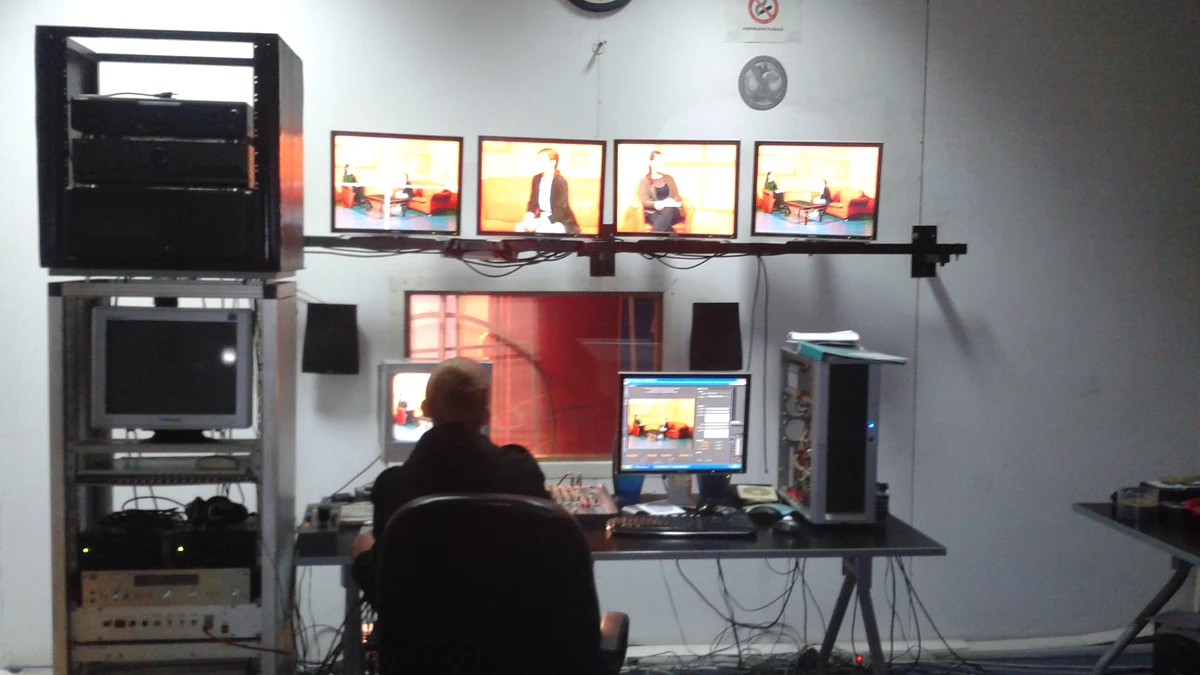
Photo: Wikimedia Commons / Creative Commons
The Paradigm Shift in Open-Source AI Tooling
Over the first three quarters of 2026, the open-source artificial intelligence community underwent a profound structural maturation. The era of novel chat wrappers, basic prompt engineering libraries, and simple vector database connectors has given way to complex agentic operating harnesses—software platforms designed to give autonomous AI agents direct, programmatic leverage over complex digital environments, media production pipelines, and the wider public internet.
Nowhere is this shift more apparent than in two trending open-source projects dominating GitHub developer discussions in early October 2026: OpenMontage and Agent-Reach.
While traditional video production requires human editors operating heavyweight non-linear editing (NLE) software (Adobe Premiere, DaVinci Resolve, Final Cut Pro), OpenMontage transforms AI coding assistants into an autonomous, full-cycle digital production studio equipped with over 700 domain-specific skills and 100 media manipulation tools. Concurrently, Agent-Reach resolves a critical bottleneck in agent autonomy: allowing AI agents to interact with dynamic social platforms and web ecosystems (Twitter/X, Reddit, GitHub, Hacker News) directly through low-overhead command-line interfaces (CLIs), bypassing exorbitant third-party API paywalls and rate limits.
In this dispatch, we analyze the underlying architectures of both frameworks, evaluate their execution pipelines, and demonstrate how to deploy them in production agentic workflows.
Architectural Deep-Dive: OpenMontage Multi-Agent Video Synthesis
OpenMontage is engineered around a core insight: high-quality video creation is not a monolithic generative task that can be solved by a single text-to-video diffusion prompt. High-production media requires a coordinated pipeline encompassing scriptwriting, beat-synced storyboard timing, typography, kinetic motion graphics, automated voiceover synthesis, B-roll selection, background audio ducking, and deterministic rendering.
The Four-Stage OpenMontage Production Pipeline
OpenMontage structures video creation through four specialized agent roles operating on an underlying HyperFrames/Remotion composition contract:
- 1. The Narrative & Beat Planner (Director Agent): Ingests source documentation (articles, GitHub pull requests, product briefs) and formulates an episodic script. Crucially, the Director Agent maps spoken words onto a deterministic millisecond timeline, generating an exact beat grid for visual scene transitions.
- 2. The Kinetic Asset Compiler (Motion Designer Agent): Generates declarative React/HTML5 animation code using GSAP and CSS keyframes. It dynamically pulls visual tokens (brand palettes, typography, SVG vectors) and constructs motion cards that animate synchronously with audio beats.
- 3. The Audio Mastering Bus (Sound Engineer Agent): Generates natural voiceovers using state-of-the-art TTS models (such as Chatterbox or ElevenLabs), calculates volume automation curves, and executes automated audio ducking—attenuating background music tracks by -14dB whenever speech audio is detected.
- 4. The Deterministic Render Engine: Executes headless Chromium instances via Puppeteer/Playwright to record frames at 60 FPS, ensuring frame-perfect seek safety and zero audio drift during MP4 encoding.
| Production Dimension | Monolithic Generative Video (Sora/Runway) | OpenMontage Agentic Engine | Production Advantage |
|---|---|---|---|
| Typography & UI Precision | Severe visual artifacting & text warping | Pixel-perfect vector typography (DOM rendered) | Imperative for software demos & SaaS explainers |
| Audio-Visual Beat Synchronization | Post-hoc manual alignment required | Millisecond-accurate programmatic keyframes | Eliminates hours of manual timeline scrubbing |
| Cost per 60-Second Render | $4.00 – $15.00 in cloud GPU diffusion | $0.12 in LLM tokens + standard CPU render | 98% cost reduction for programmatic video |
| Revision & Iteration Workflow | Re-roll prompt (unpredictable outcome) | Deterministic code edit (git commit) | Supports standard CI/CD version control |
Architectural Deep-Dive: Agent-Reach and Internet CLI Perception
While OpenMontage equips agents with media creation power, Agent-Reach solves the reciprocal challenge: how an autonomous agent perceives and extracts real-time information from the live internet without incurring prohibitive SaaS subscription bills or tripping anti-bot protections.
Following aggressive API price hikes across major social and technical platforms over the past 24 months, autonomous agents attempting to conduct market research, monitor open-source security issues, or track viral technology trends were effectively blinded. Commercial API plans frequently cost hundreds or thousands of dollars monthly and impose restrictive rate quotas.
Agent-Reach circumvents this by exposing a standardized, unified CLI interface that leverages lightweight headless terminal scraping, RSS ingestion, and reverse-engineered client protocols:
# Agent-Reach CLI Operations
# 1. Search technical discussions on Hacker News & GitHub without API tokens
agent-reach search --platform hackernews,github --query "GPT-6.1 Sol benchmarks" --limit 20

# 2. Extract structured discussion thread from Twitter/X
agent-reach thread --platform x --id "18412984719283749" --format json --clean-emojis

# 3. Stream real-time subreddit posts matching technical keywords
agent-reach stream --platform reddit --subreddit "LocalLLaMA" --keywords "vLLM,SGLang" --output /tmp/stream.jsonl
By packaging these commands into a native Model Context Protocol (MCP) server, developers allow Claude, GPT-6, or local Llama instances to invoke agent_reach_search() or agent_reach_thread() directly as standard tool calls.
Synthesizing the Two: The Autonomous Tech Changelog Video Agent
The true power of modern open-source stacks emerges when these modular frameworks are chained together. Consider an autonomous engineering workflow:
- Perception (Agent-Reach): An agent runs continuously, monitoring GitHub releases across core infrastructure repositories (e.g.,
vllm-project/vllmormicrosoft/markitdown). - Synthesis: When a new major release tag is pushed, the agent fetches the release notes, diffs, and top community commentary using Agent-Reach.
- Composition (OpenMontage): The agent passes the structured changelog to OpenMontage, which drafts a 45-second kinetic promo video showcasing the benchmark numbers, architecture diagrams, and installation commands.
- Publication: The compiled MP4 is automatically rendered in headless Linux containers and queued for distribution, completely closing the loop between code release and public video announcement.
import asyncio
from agent_reach import ReachClient
from openmontage import VideoComposer, CompositionConfig

async def auto_generate_repo_explainer(repo_name: str):
    reach = ReachClient()
    composer = VideoComposer()

    # 1. Ingest repository release notes via Agent-Reach
    print(f"[Pipeline] Fetching release metadata for {repo_name}...")
    release_info = await reach.github.get_latest_release(repo_name)

    # 2. Configure video composition with OpenMontage
    config = CompositionConfig(
        fps=60,
        width=1920,
        height=1080,
        theme="dark_technical",
        audio_ducking=True
    )

    # 3. Compile timeline with kinetic motion cards and TTS narration
    timeline = composer.build_timeline(
        title=f"{repo_name} v{release_info.tag}",
        bullet_points=release_info.highlights,
        code_snippet=release_info.primary_code_example,
        voice="technical_narrator_male_02"
    )

    # 4. Render deterministic MP4
    output_path = f"/tmp/videos/{repo_name.replace('/', '_')}_release.mp4"
    await composer.render(timeline, output_path, config)
    print(f"[Pipeline] Video rendered successfully at: {output_path}")

if __name__ == "__main__":
    asyncio.run(auto_generate_repo_explainer("microsoft/markitdown"))
Deterministic Seek Safety: The HyperFrames Composition Contract
A recurring failure mode in generative video production is non-deterministic rendering. Traditional video rendering pipelines that rely on standard browser clocks (performance.now() or setInterval) suffer from frame jitter and variable animation speeds when the host CPU experiences thread contention.
OpenMontage eliminates this by adhering strictly to the HyperFrames composition contract:
- Single Paused Timeline: All animations are bound to a single master GSAP timeline paused at
time = 0. Playback is driven exclusively by external seek commands rather than free-running wall-clock time. - Seek-Safe Sub-Compositions: Every scene is encapsulated as an isolated sub-composition with explicit
data-startanddata-durationattributes. A headless renderer can seek to frame 420 or frame 1,200 at arbitrary rendering speeds without causing audio-visual drift or missing keyframes. - Zero DOM Mutation During Capture: Dynamic data (titles, metrics, user avatars) are pre-injected into the DOM before capture commences. During rendering, only CSS transform and opacity properties are animated, guaranteeing hardware-accelerated GPU compositor execution.
Security & Rate-Limiting Guardrails
Production Operational Best Practices
- Implement Exponential Backoff in Scraping Swarms: While Agent-Reach enables direct web interaction, excessive request concurrency will trigger IP-level Cloudflare challenges. Always configure residential proxy pools and jittered request intervals (2.5s – 7.0s) for continuous monitoring.
- Isolate Headless Chromium Video Renders: OpenMontage’s rendering pipeline spawns multiple Chromium processes that consume heavy CPU and RAM during frame export. Execute rendering jobs in ephemeral Docker containers capped at 4 CPU cores and 8GB RAM to prevent resource starvation on primary application servers.
- Sanitize Third-Party User Input: When ingesting public forum discussions or Reddit comments via Agent-Reach, always pass the raw text through a strict prompt-injection filter before feeding it into downstream LLM narration scripts.
Primary Citations & Technical References
- OpenMontage Project. (2026). OpenMontage: An Agentic Video Production System with 700+ Skills and Deterministic Rendering. GitHub Repository:
calesthio/OpenMontage. - Agent-Reach Engineering Team. (2026). Agent-Reach: Zero-API Internet Perception and CLI Tooling for Autonomous AI Agents. GitHub Repository:
Panniantong/Agent-Reach. - HyperFrames Core Architecture Working Group. (2026). Deterministic Multi-Track HTML5 Video Composition Specifications. Web Media Standards Initiative.
- Stanford University AI Lab. (2026). Multi-Agent Coordination in Generative Media Production: From Text Brief to Mastered Video. Technical Report CS-2026-088.