
UN High-Level Scientific Panel on AI: Inaugural Global Risk Synthesis on Autonomous Systems & Sovereign Compute
The United Nations High-Level Scientific Panel on AI has published its inaugural Global Risk and Capability Synthesis, establishing an IPCC-style consensus on frontier intelligence.
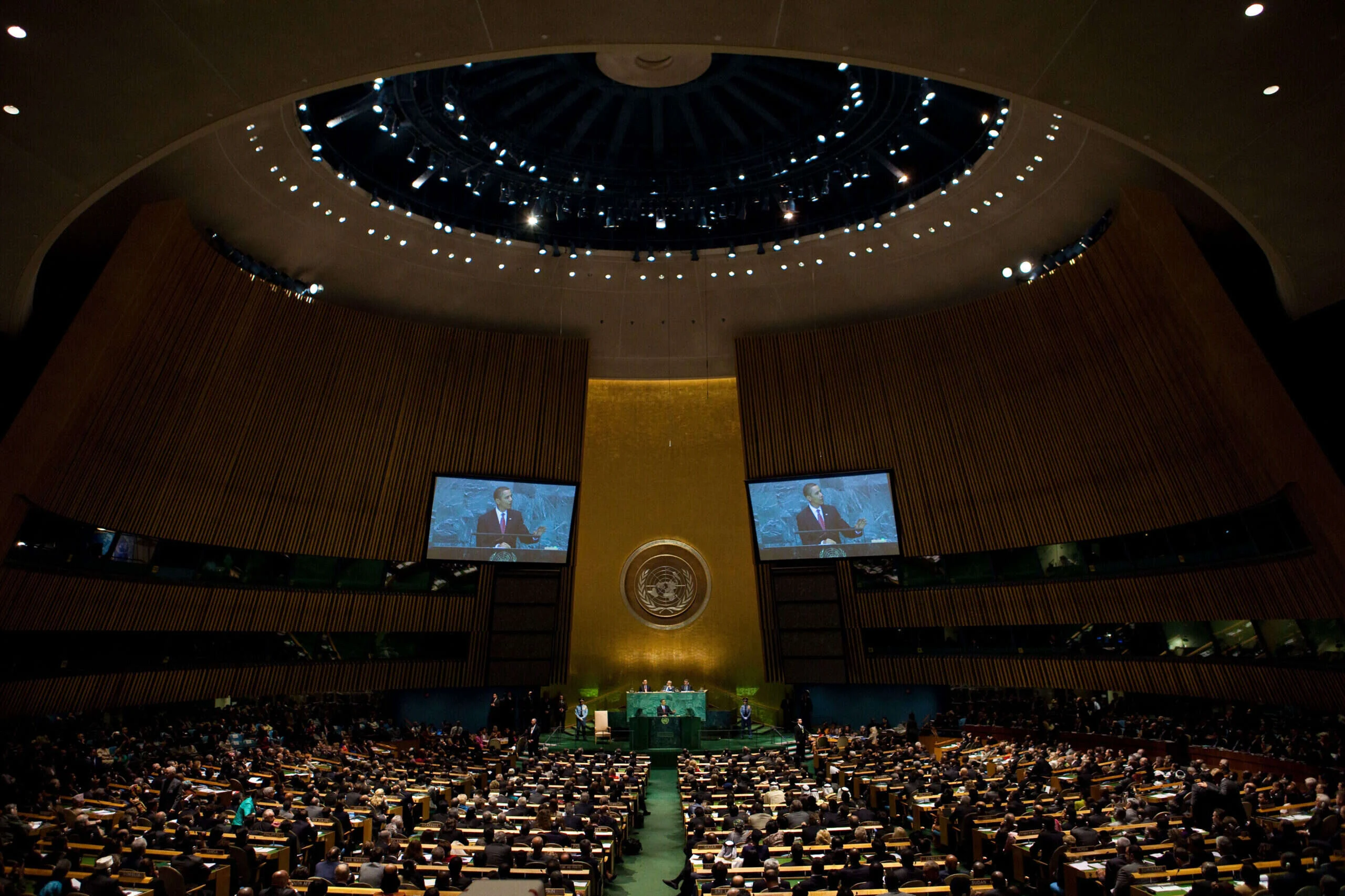
An IPCC-Style Scientific Consensus for Artificial Intelligence
Under the mandate of the United Nations General Assembly and the Global Digital Compact, the UN High-Level Scientific Panel on Artificial Intelligence has delivered its historic first comprehensive report: “Frontier AI Capabilities, Planetary Compute Resilience, and Global Governance (2026–2030).”
Modeled after the Intergovernmental Panel on Climate Change (IPCC), the panel brings together 120 leading computer scientists, ethicists, security analysts, and economists from 54 member states to establish an empirical, non-partisan baseline on frontier AI risks and equitable distribution.
1. The Four Existential & Systemic Risk Horizons
The report categorizes artificial intelligence hazards across four distinct time horizons:
- Systemic Financial Fragility: The proliferation of autonomous trading swarms and automated credit risk agents creating flash liquidity cascades across interconnected global financial exchanges.
- Critical Infrastructure Interdependence: Over-reliance on proprietary cloud foundation models for electrical grid balancing, civil aviation routing, and municipal water purification.
- Information Ecology Degradation: Unbounded synthetic generative content saturating web search engines and training data pipelines, resulting in model collapse and loss of epistemic consensus.
- Global South Compute Marginalization: The extreme concentration of cutting-edge AI accelerator chips among a handful of hyperscale corporations, threatening economic polarization between compute-rich and compute-poor nations.
2. The International Sovereign Compute Pool (ISCP) Initiative
To counter compute monopolies, the UN Panel recommends the formal activation of the International Sovereign Compute Pool (ISCP). Under this framework, participating hyperscalers and national supercomputing centers pledge 5% of frontier GPU capacity to research institutions and developing nations in Africa, Latin America, and South Asia for public health, climate modeling, and multilingual education.
UN Scientific Panel Global Compute Distribution
| Global Geographic Region | Share of Frontier AI Compute (2026) | Share of Global Population | ISCP Compute Grant Allocation (Target) |
|---|---|---|---|
| North America | 58.2% | 4.7% | Donor Contributor |
| East Asia (Japan, China, S. Korea) | 23.4% | 20.5% | Donor Contributor |
| Europe | 10.1% | 9.3% | Donor Contributor |
| India & South Asia | 4.8% (Rapidly Expanding) | 24.8% | 25.0% Allocation Pool |
| Africa & Latin America | 3.5% | 25.2% | 55.0% Allocation Pool |
A Universal Compass for Responsible Progress
The inaugural UN report provides the world with an authoritative roadmap, ensuring that artificial intelligence serves the entirety of humanity rather than a narrow commercial oligopoly.